
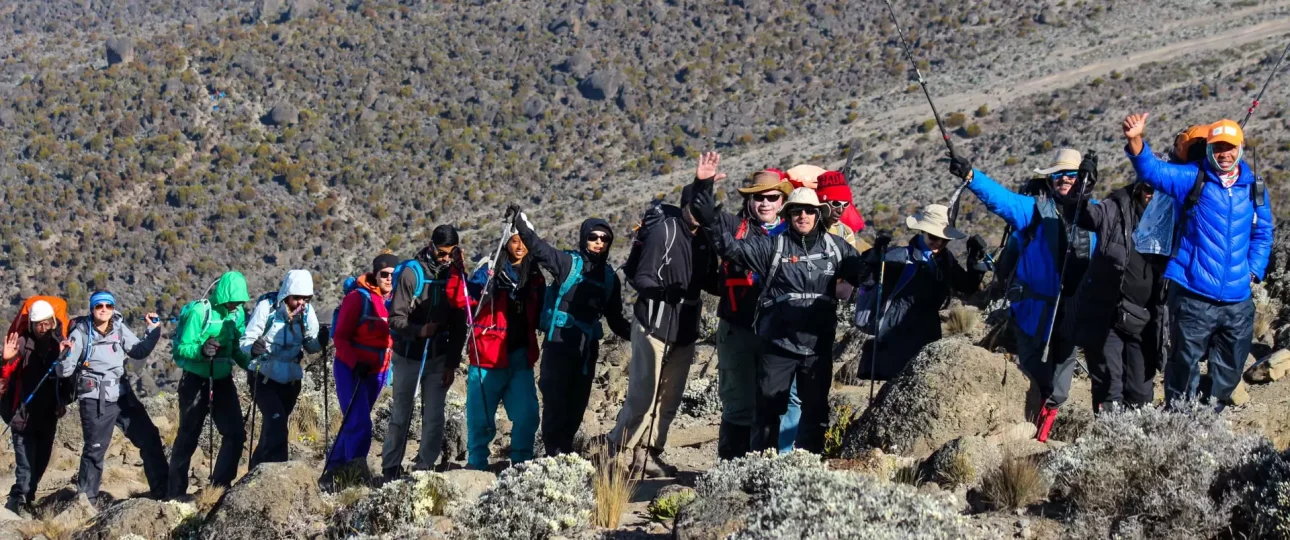
Our Kilimanjaro Local Guides, Chefs and Porters: The Team Behind Your Trek
Meet the Kilimanjaro local guides, chefs and porters behind your Trek and Hide Adventures trek and learn how our mountain team supports a safe, responsible and memorable climb.
Reaching Uhuru Peak, the summit of Mount Kilimanjaro, is a remarkable personal achievement, but no climber reaches the top completely alone. Behind every successful Kilimanjaro expedition is a dedicated mountain crew working together to make the journey safer, more comfortable and more memorable.
At Trek and Hide Adventures, our Kilimanjaro local guides, chefs and porters are an essential part of the trekking experience. They bring local knowledge, mountain experience, practical skills and genuine hospitality to every expedition.
From the guide who leads you along the trail and monitors your progress to the chef who prepares nourishing meals at high altitude and the porters who transport essential equipment between camps, every member of the mountain crew has an important responsibility.
Understanding the people behind your Kilimanjaro trek can also help travelers appreciate why choosing a responsible local trekking company matters.
Who Makes Up a Kilimanjaro Mountain Crew?
A Kilimanjaro trekking team normally consists of several different roles, with the exact number depending on the size of the climbing group, route and trekking arrangements.
The main members are mountain guides, assistant guides, chefs and porters. On some treks, additional specialized crew may be involved depending on the services included in the itinerary.
Although travelers may spend the most time interacting with their lead guide, every member of the crew contributes to the success of the expedition.
Tanzania’s mountain regulations require climbers, guides and porters to be registered before attempting a mountain climb, and establish requirements concerning official routes and porter loads.
Our Kilimanjaro Local Guides
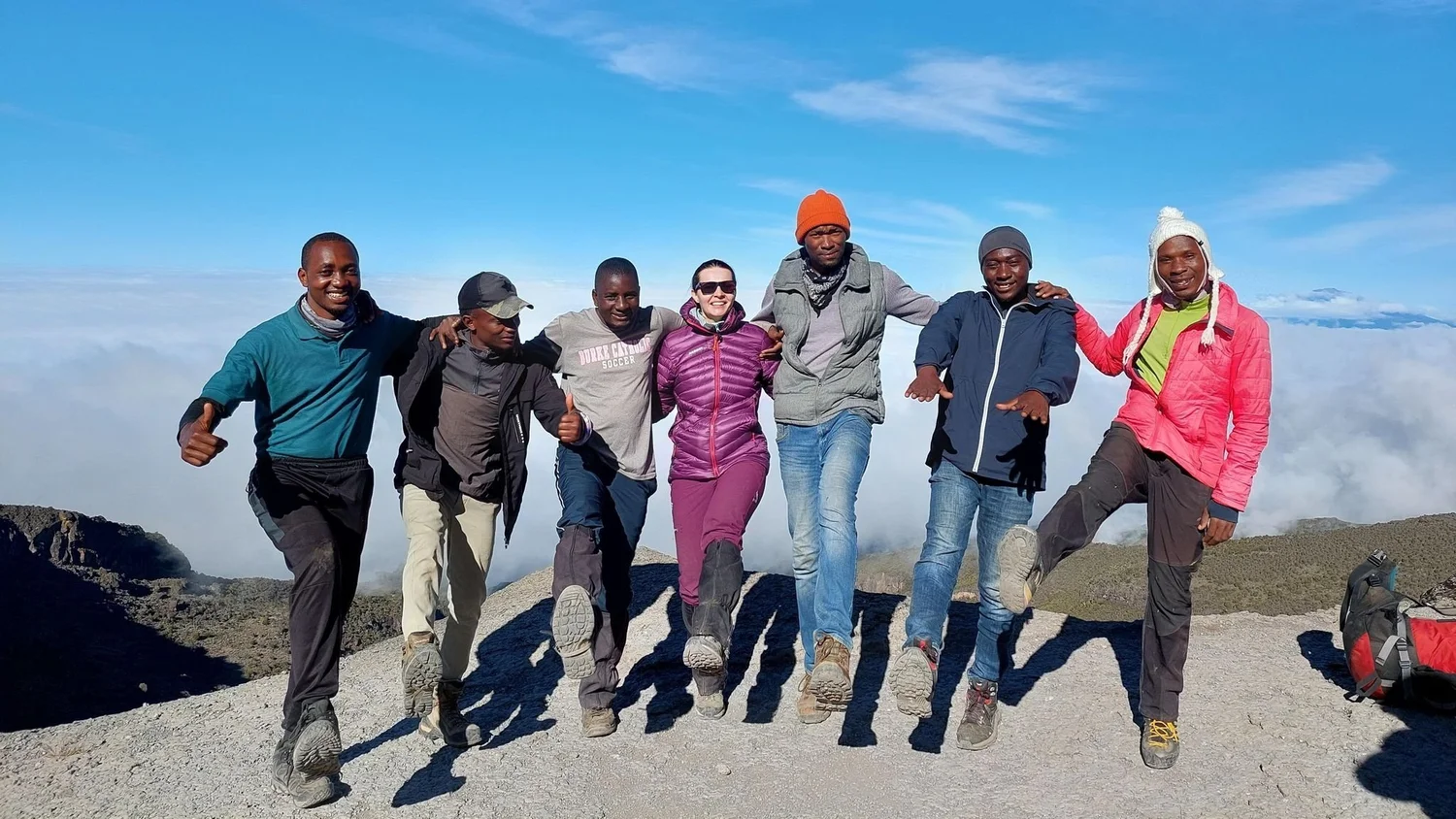
The Kilimanjaro local guide is one of the most important people on your mountain expedition.
A good guide does much more than simply show you the way.
Your guide is responsible for leading the group along the appropriate trail, monitoring the progress of climbers, communicating with the support crew and helping maintain a safe and organized trekking experience.
Local guides also bring something that cannot easily be learned from a map: first-hand knowledge of the mountain.
They understand the different routes, terrain, weather patterns, campsites and common challenges encountered by trekkers.
Why Choose a Local Kilimanjaro Guide?
Choosing a local guide gives you the opportunity to experience Kilimanjaro through the perspective of someone who knows the mountain and Tanzania intimately.
Your guide can explain the landscape, local traditions, mountain terminology and surrounding environment while helping you understand what to expect during each stage of the trek.
Local guides are also familiar with the practical realities of trekking at altitude. They can help you maintain a sensible pace, recognize when you are becoming excessively tired and communicate important observations to the rest of the mountain team.
TANAPA’s mountain regulations require guides to remain with and in sight of their assigned climbing party throughout the climbing trip.
Experience Matters on Mount Kilimanjaro
Kilimanjaro does not require technical mountaineering skills on its standard trekking routes, but experience remains extremely valuable.
A guide who has spent years working on the mountain understands that every trekker is different.
Some people adjust quickly to the altitude, while others need more time. Some are naturally fast walkers, while others require a slower and more consistent pace.
An experienced guide understands the importance of pole pole — slowly, slowly — particularly as the altitude increases.
Our Guides Help You Understand the Mountain
A Kilimanjaro trek is more enjoyable when you understand what you are seeing.
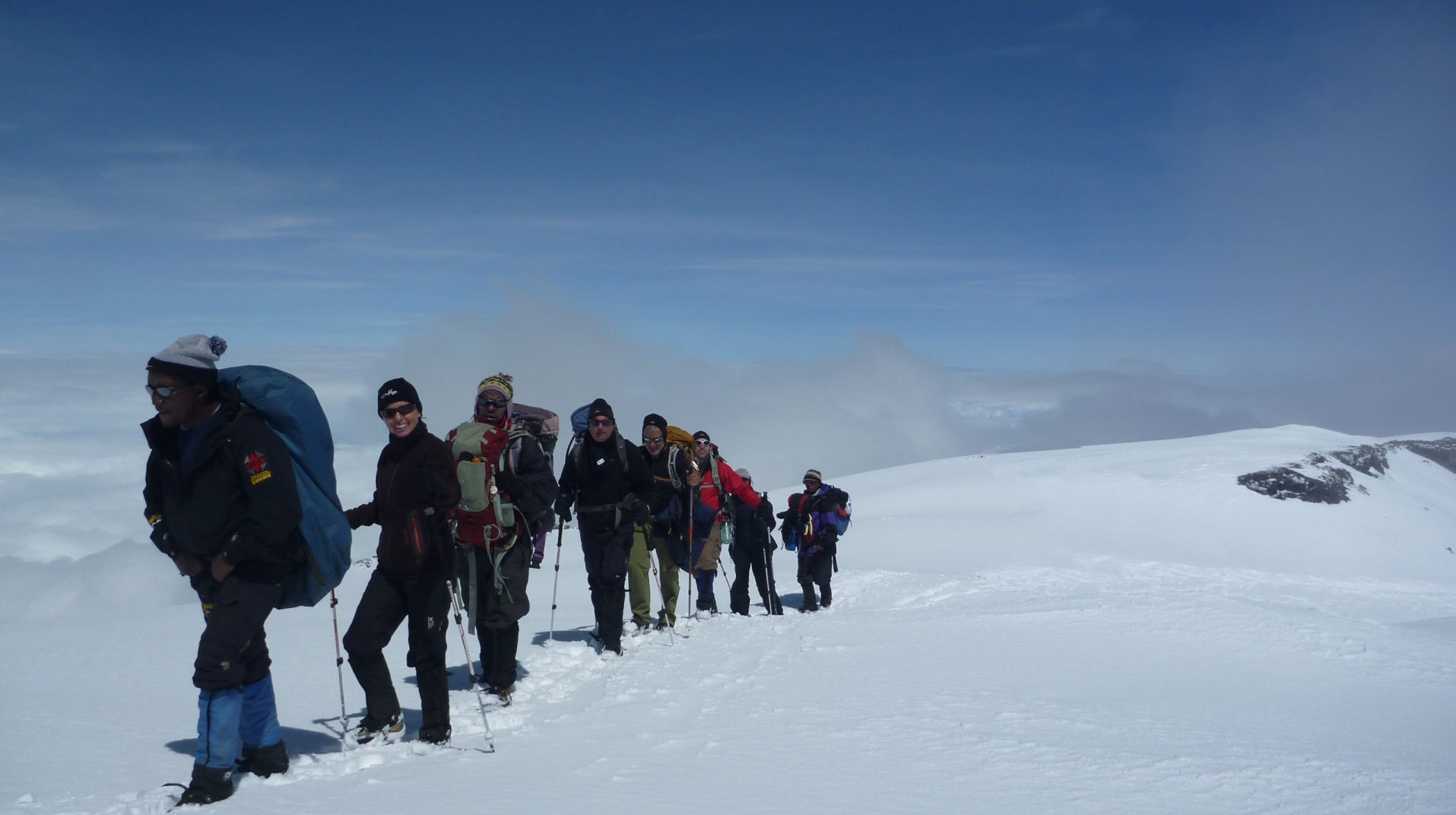
Your guide can explain the different vegetation zones as you climb from the lower slopes through the rainforest and moorland toward the alpine desert and summit zone.
The journey therefore becomes more than simply walking from one camp to another.
It becomes an opportunity to understand one of Africa’s most remarkable mountain environments.
Your Guide and Altitude Awareness
Altitude is one of the biggest challenges on Kilimanjaro.
Physical fitness can help you manage the demands of trekking, but it does not guarantee that your body will acclimatize successfully.
Your guide plays an important role in observing how you are coping with the increasing elevation and communicating concerns when necessary.
This is one reason travelers should never feel pressured to hide symptoms or pretend that everything is fine.
Communication with your guide is essential.
If you feel unwell, unusually weak, dizzy, confused or short of breath, tell your guide immediately.
Our Assistant Guides
Larger groups may have assistant guides who work alongside the lead guide.
Assistant guides help maintain communication with different members of the group and provide additional support along the trail.
This can be particularly useful when a group contains trekkers with different walking speeds.
The objective is to keep the expedition organized while ensuring that climbers receive appropriate attention throughout the trek.
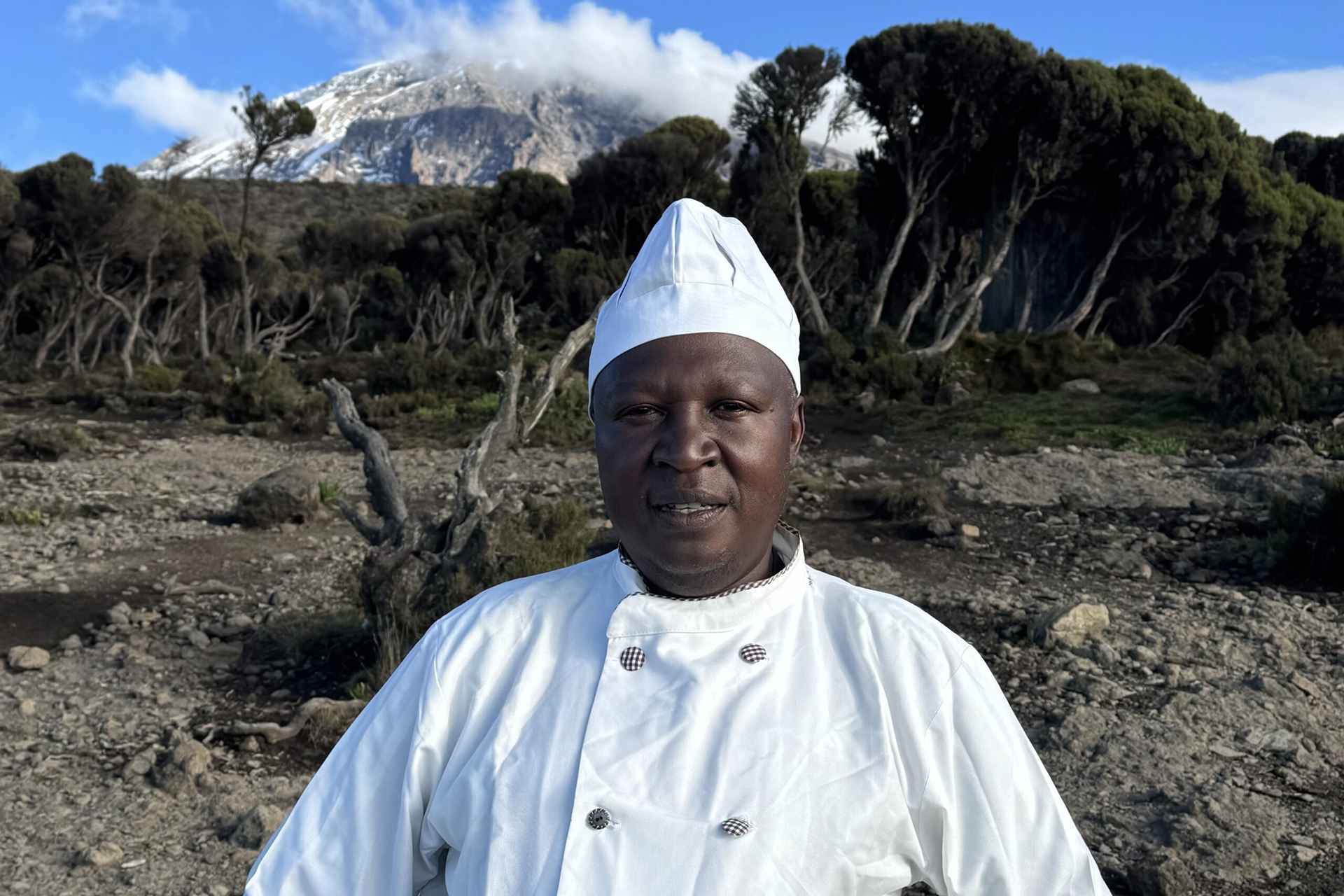
Our Kilimanjaro Chefs
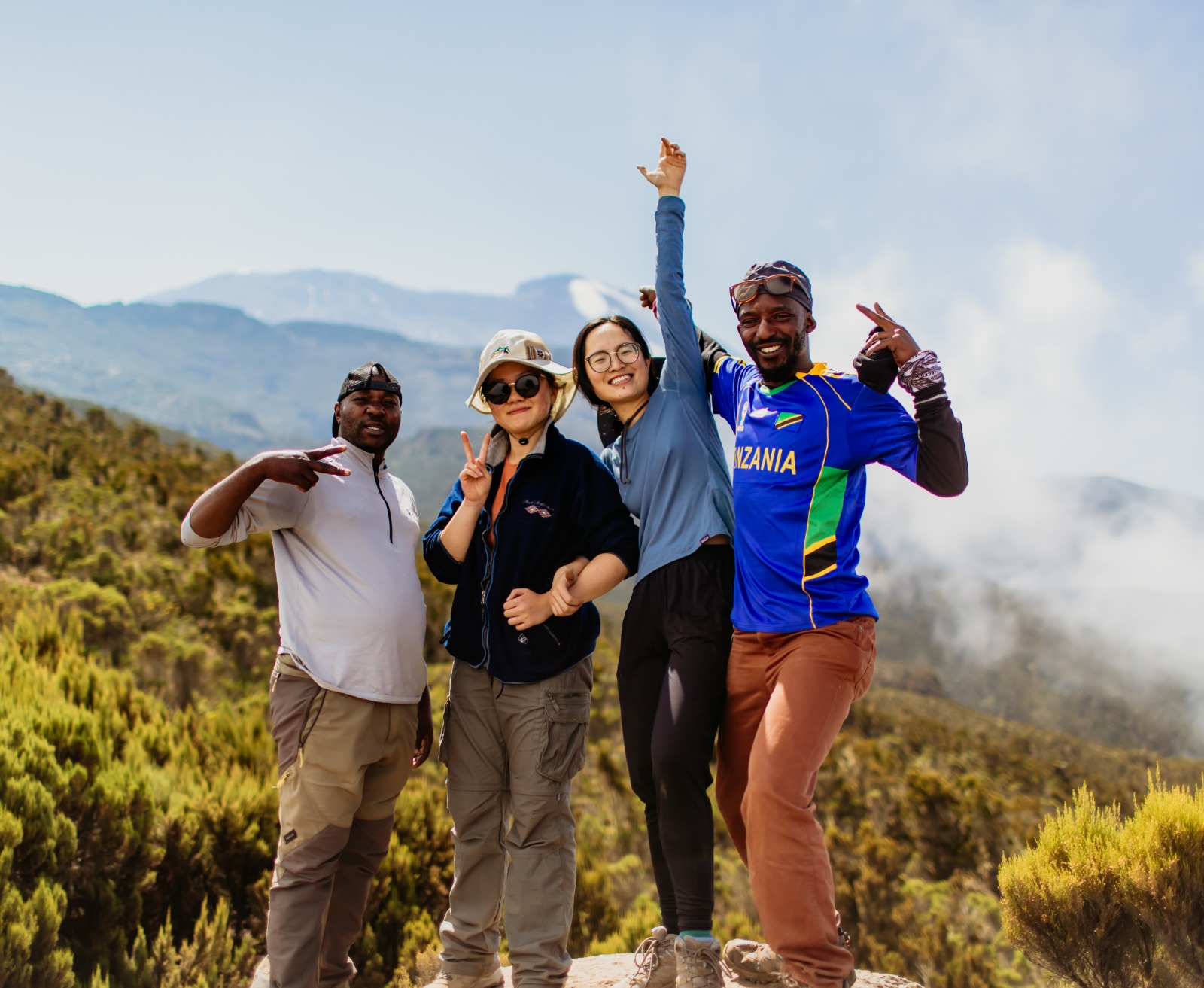
Behind every successful trekking day is another important member of the mountain crew: the Kilimanjaro chef.
Food becomes especially important during a multi-day mountain expedition because your body needs energy to keep walking day after day.
Our mountain chefs prepare meals designed to provide the energy and nourishment trekkers need throughout the journey.
Cooking on a mountain is very different from preparing food in a conventional kitchen. The chef works with limited equipment, changing weather conditions and supplies transported by the mountain crew.
Despite these challenges, the goal is to provide warm, satisfying meals at the end of each trekking day.
Why Food Matters During a Kilimanjaro Trek
A Kilimanjaro climb can involve several hours of walking each day, followed by another demanding day on the trail.
Good nutrition can therefore make a significant difference to your overall trekking experience.
Meals generally include a combination of carbohydrates, protein, vegetables, fruit and other foods suitable for active trekkers.
Breakfast provides fuel for the day’s walking, while lunch and dinner help replenish energy.
Your chef also helps provide warm drinks and other refreshments, which can be particularly welcome during cold mornings and evenings.
The Chef’s Role Goes Beyond Cooking
Preparing meals is only part of the chef’s responsibility.
On camping routes, the chef must work within the mountain environment, organize ingredients and equipment, maintain food hygiene and coordinate with the rest of the crew.
The timing of meals is also important.
After a long trekking day, arriving at camp and knowing that a warm meal is waiting can provide a significant psychological boost.
For many trekkers, some of their favorite Kilimanjaro memories involve sitting around the dining tent with their group and crew, sharing stories over a hot meal.
Can We Cater for Different Dietary Requirements?
Dietary requirements should be communicated before your trek.
Whether you are vegetarian, vegan or have specific food allergies or intolerances, advance notice allows the trekking team to plan appropriately.
Travelers should provide accurate information during the booking and pre-trek preparation process rather than waiting until they arrive at the mountain.
This gives the chef and operations team sufficient time to organize suitable meals and ingredients.
Our Kilimanjaro Porters
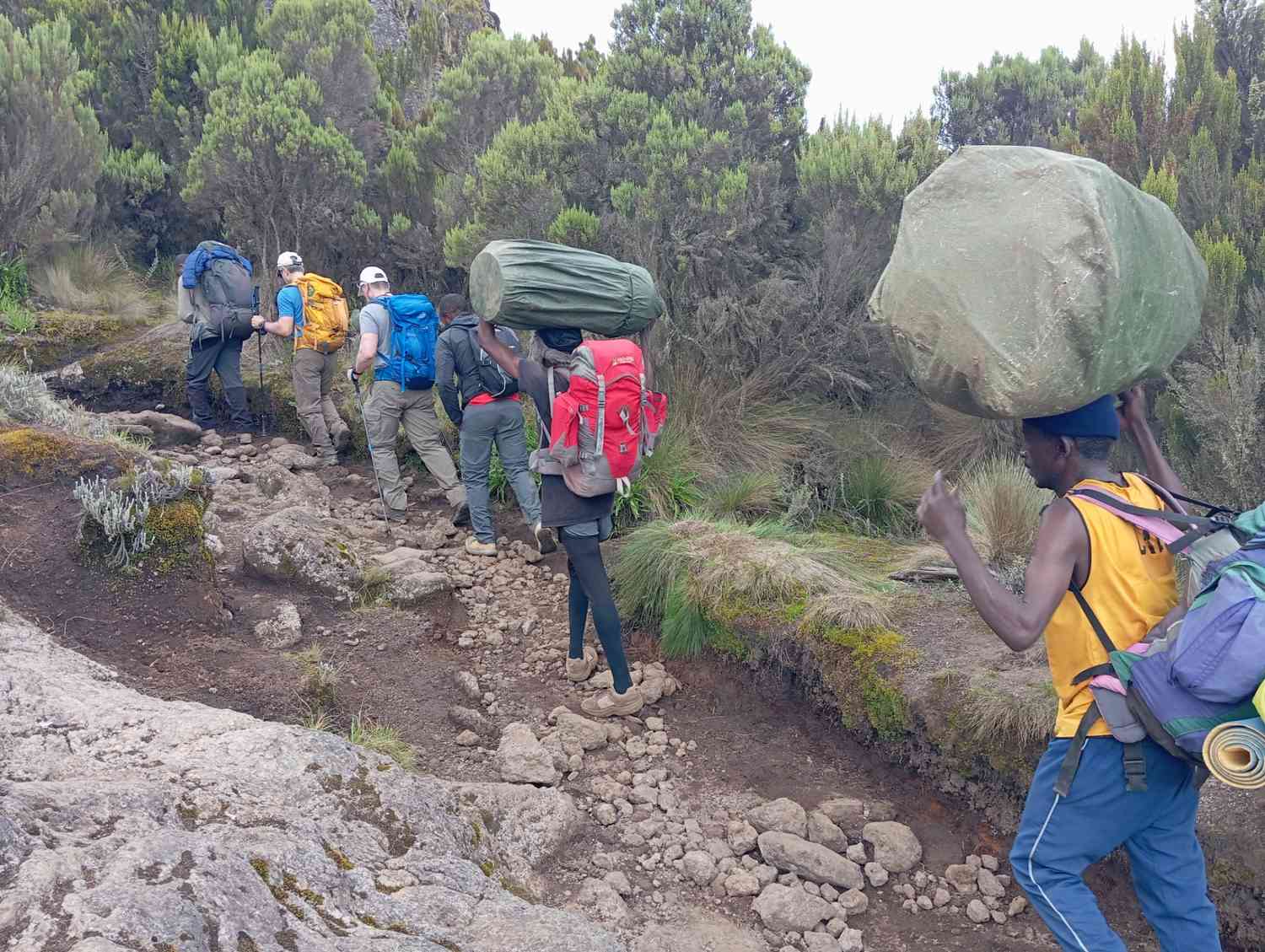
The porters are among the most important members of any Kilimanjaro trekking team.
They transport essential expedition equipment between camps, allowing climbers to focus primarily on walking and acclimatization.
Depending on the route and itinerary, porters may carry tents, camping equipment, cooking supplies, food and other group equipment.
Their work often begins before trekkers arrive at camp and continues after the climbers have settled in.
The Work Porters Do Behind the Scenes
When trekkers arrive at a campsite, they may find tents already prepared, dining arrangements organized and equipment ready.
This does not happen automatically.
The mountain crew has worked ahead to make the camp functional for the group.
Porters may leave camp earlier than the trekkers, carry supplies along the trail and prepare for the group’s arrival.
This behind-the-scenes work is one of the reasons the Kilimanjaro trekking experience can be so much more comfortable than attempting to carry every item yourself.
Porter Welfare Matters
Choosing a Kilimanjaro operator should not be based only on price, route and accommodation.
How a company treats its mountain crew matters.
The Kilimanjaro Responsible Trekking Organization (KRTO), which operates the Kilimanjaro Porters Assistance Project (KPAP), promotes ethical treatment of mountain crew and responsible trekking practices. Its guidelines address areas including wages, transparent tipping, food, accommodation, equipment, medical assistance and porter load limits.
KPAP’s current guidelines recommend that company gear carried by a porter should not exceed 20 kg, alongside standards for adequate food, shelter and appropriate equipment.
Tanzania’s mountain regulations also specify porter load requirements, with registered porters permitted to carry luggage within the prescribed weight range.
Responsible Porter Treatment on Kilimanjaro
Responsible trekking means recognizing that porters are professionals who deserve fair and respectful treatment.
This includes appropriate working conditions, adequate food, suitable shelter, appropriate equipment and transparent compensation arrangements.
Travelers can also contribute by choosing an operator that is transparent about its crew practices and tipping procedures.
KPAP’s Partner for Responsible Travel Programme specifically monitors practices relating to porter wages, tipping, food, accommodation, equipment and load weights.
Why the Number of Porters Matters
The number of porters supporting a trek should be appropriate for the group and the amount of equipment being transported.
Using too few porters can result in excessive loads, while using unnecessarily large crews can create other concerns.
Responsible trekking companies should plan the crew according to the route, group size, camping requirements and equipment needed.
KPAP’s current Partner for Responsible Travel guidelines recommend appropriate porter numbers so that individual porters do not carry more than the specified company-gear limit.
What Do Porters Carry?
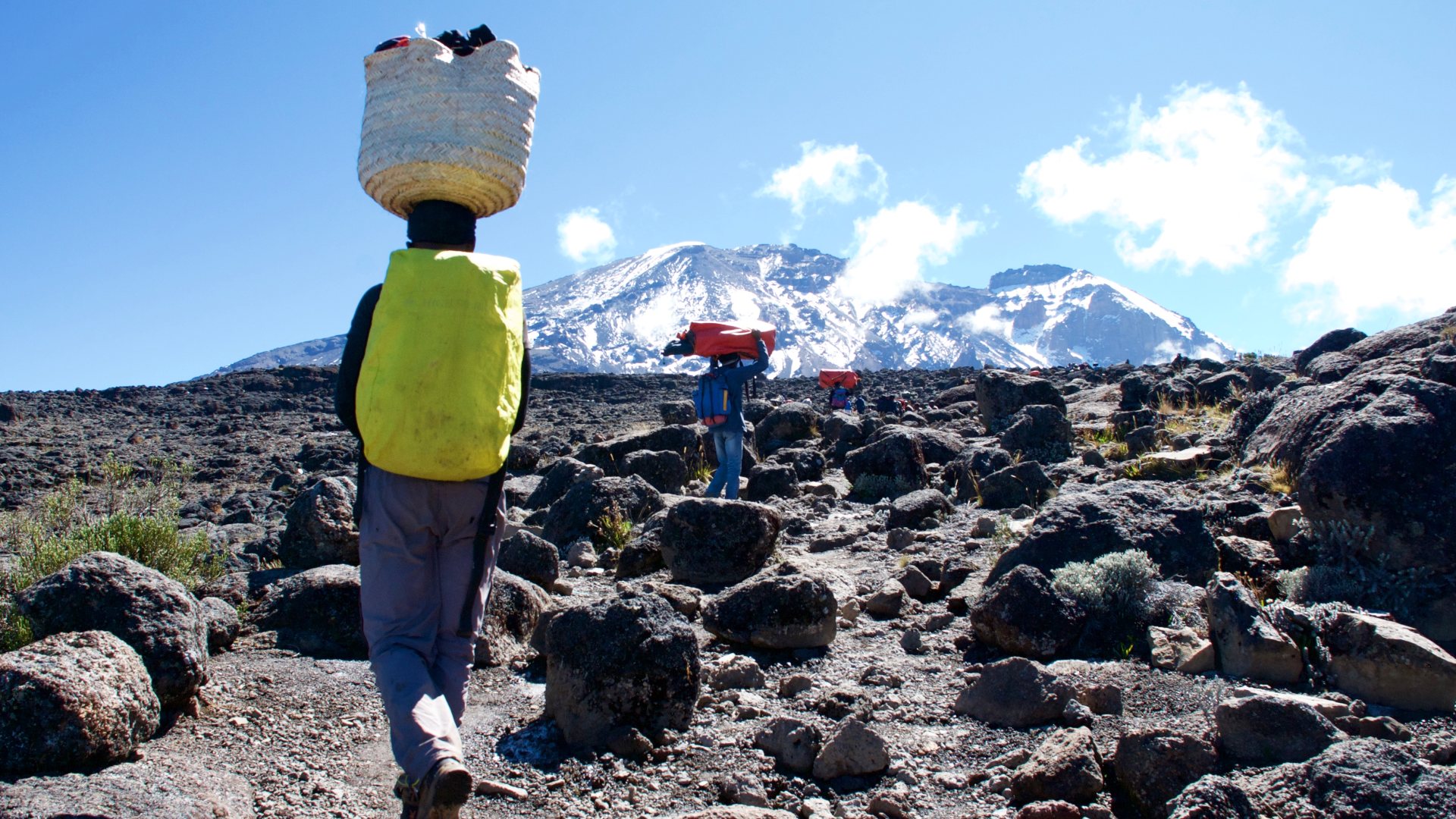
The exact responsibilities vary depending on the expedition, but porters can transport items such as tents, sleeping equipment, cooking equipment, food and other group supplies.
Trekkers normally carry their personal daypack containing the items they need during the day’s hike.
Your exact luggage arrangements should be confirmed with your trekking operator before departure so you know what you are expected to carry and what the support crew will transport.
The Teamwork Behind Every Kilimanjaro Trek
A successful Kilimanjaro expedition depends on teamwork.
The guide communicates with the climbers and coordinates the mountain team.
The chef prepares meals and manages the kitchen operation.
Porters transport essential equipment and supplies.
Assistant guides provide additional support.
The result is a coordinated system that allows trekkers to concentrate on the journey.
This teamwork becomes particularly noticeable during summit night, when the group faces the most demanding part of the trek.
What Happens During Summit Night?
Summit night is different from the other days on Kilimanjaro.
Trekkers typically begin the ascent during the night, walking slowly toward the summit while temperatures are at their coldest.
The guide’s experience becomes particularly valuable at this stage.
The group moves at a controlled pace, with regular attention given to the condition of each climber.
The mountain crew’s support helps create an organized environment during what can be a physically and mentally demanding part of the expedition.
Building a Relationship With Your Mountain Crew
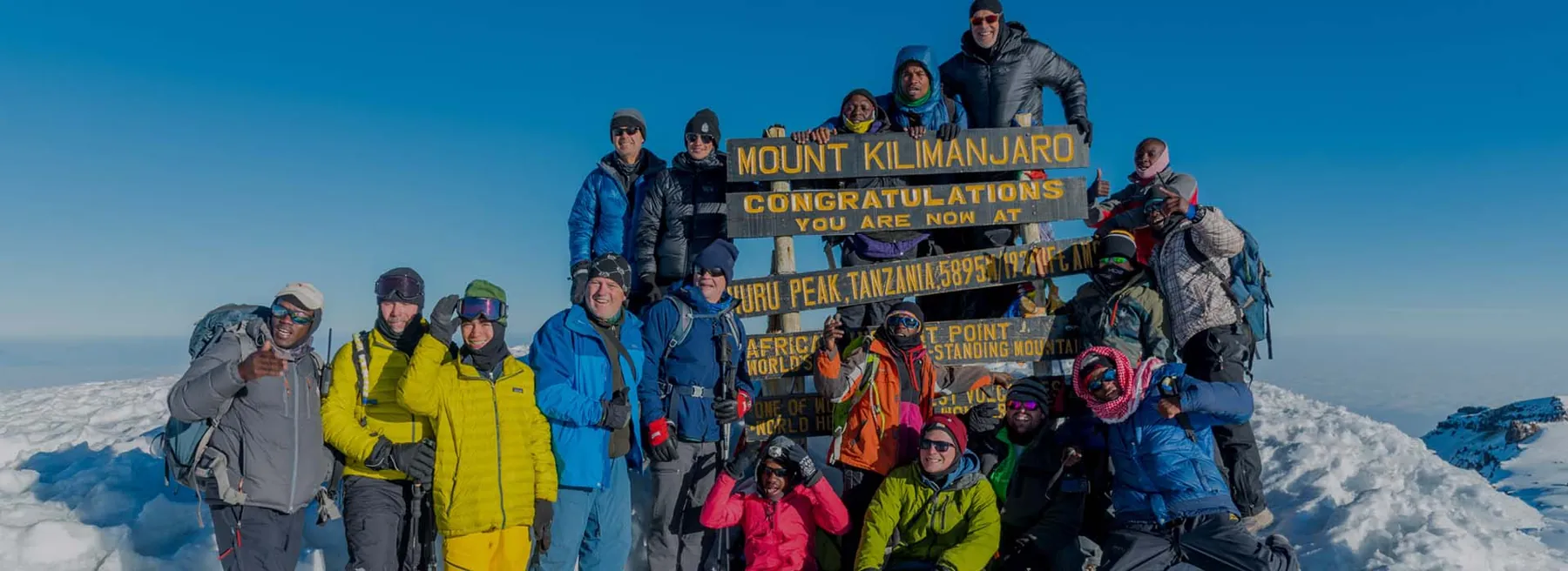
A Kilimanjaro trek often creates a unique relationship between travelers and their mountain crew.
You spend several days together, sharing meals, walking the same trails and experiencing the changing mountain environment.
Taking time to learn your guides’ names, speak with the crew and show appreciation for their work can make the experience more personal.
You may discover that your guides and crew have fascinating stories about Kilimanjaro, Tanzania and life around the mountain.
Learn a Few Swahili Words
Learning a few Swahili expressions can be a fun way to connect with your Tanzanian mountain crew.
Jambo means hello, while asante means thank you.
You will also hear pole pole, meaning slowly, slowly, throughout your trek.
Another common expression you may hear is hakuna matata, meaning there are no worries.
Using a few local words is not necessary, but it can be a friendly way to show appreciation for the culture you are experiencing.
Tipping Your Kilimanjaro Crew
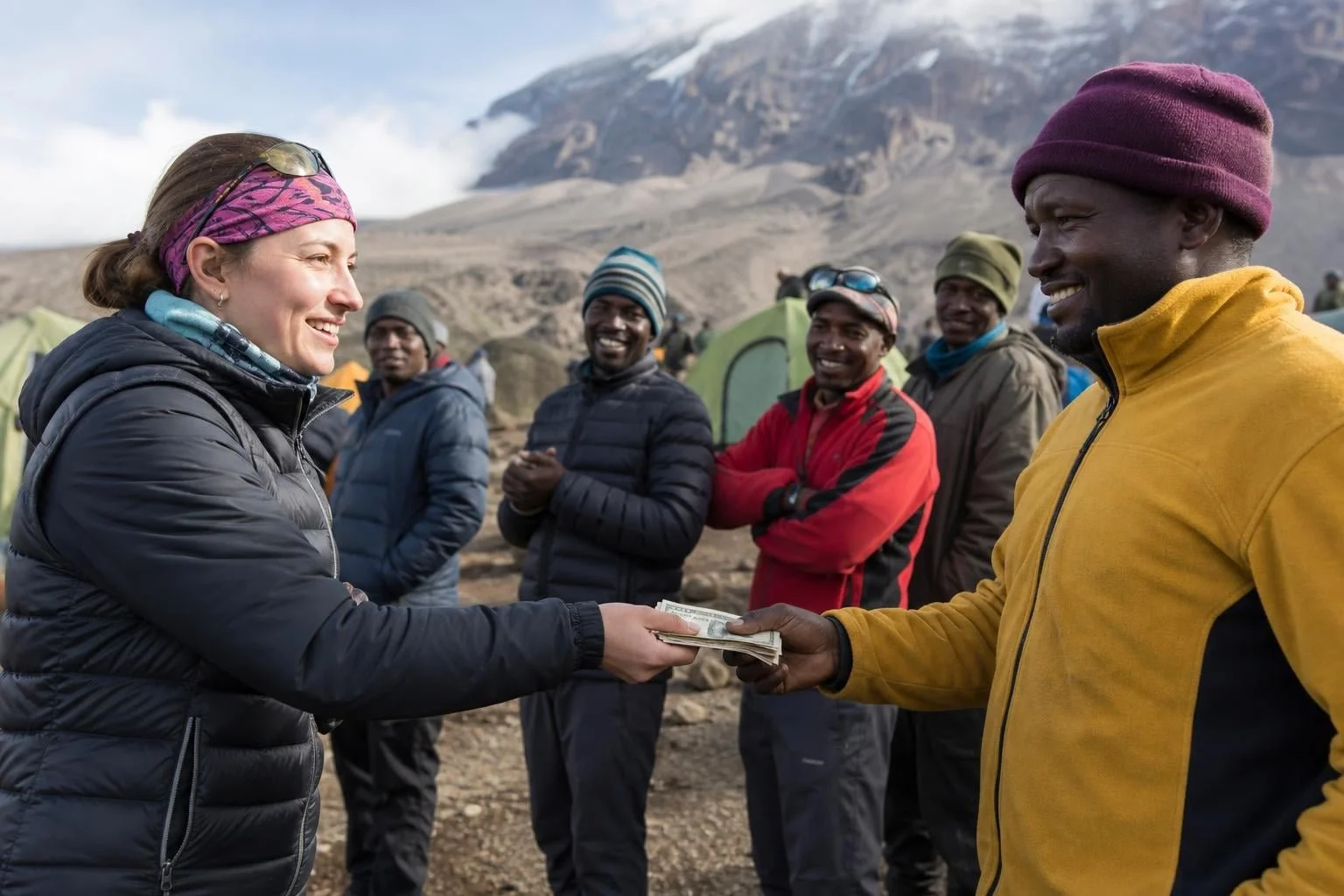
Tipping is customary on Kilimanjaro and is an important consideration when budgeting for your trek.
However, travelers should understand the difference between a crew member’s wages and tips.
KPAP recommends transparent tipping procedures so that crew members receive the amount intended for them. It also recommends that climbers know the number of guides, chefs and porters supporting their climb and understand the company’s tipping procedure before beginning the trek.
At Trek and Hide Adventures, we encourage travelers to discuss tipping expectations with us during the pre-climb briefing so there are no surprises at the end of the expedition.
Why Transparent Tipping Is Important
A transparent tipping system helps ensure that everyone who contributed to your trek is recognized appropriately.
KPAP recommends that companies provide tipping guidelines and that climbers are informed about the number of crew members supporting their climb.
The most important principle is that the system should be clear to both travelers and crew.
Choosing a Kilimanjaro Operator That Values Its Crew
When comparing Kilimanjaro trekking companies, travelers often focus on route, price, accommodation and summit success.
Those factors matter, but crew welfare should also be part of the decision.
Ask potential operators how they treat their guides and porters, what equipment is provided, how tipping works and how the company handles illness or injury among the mountain crew.
A responsible operator should be comfortable answering these questions.
Local Knowledge Is Part of the Experience
One of the advantages of trekking with a Tanzanian company is the opportunity to work with a local team that understands the mountain and the surrounding community.
Your guide is not simply a person carrying a map.
They are part of the local tourism industry and can provide insight into Tanzanian culture, language, food, history and mountain life.
For international visitors, these interactions can become some of the most memorable parts of the trip.
Trek and Hide Adventures: Our Mountain Team
At Trek and Hide Adventures, we understand that our Kilimanjaro team is at the heart of the trekking experience.
Our guides, chefs and porters work together to support every expedition from the moment the group begins the trek until the final descent.
We value professionalism, teamwork, communication and respect.
Our goal is to create an environment where travelers can concentrate on enjoying the mountain while our experienced crew takes care of the essential logistics.
We also believe that responsible tourism must include responsible treatment of the people who make adventure travel possible.
More Than a Summit
When you stand at Uhuru Peak and look across the vast landscape below, it is natural to feel that you have achieved something individually.
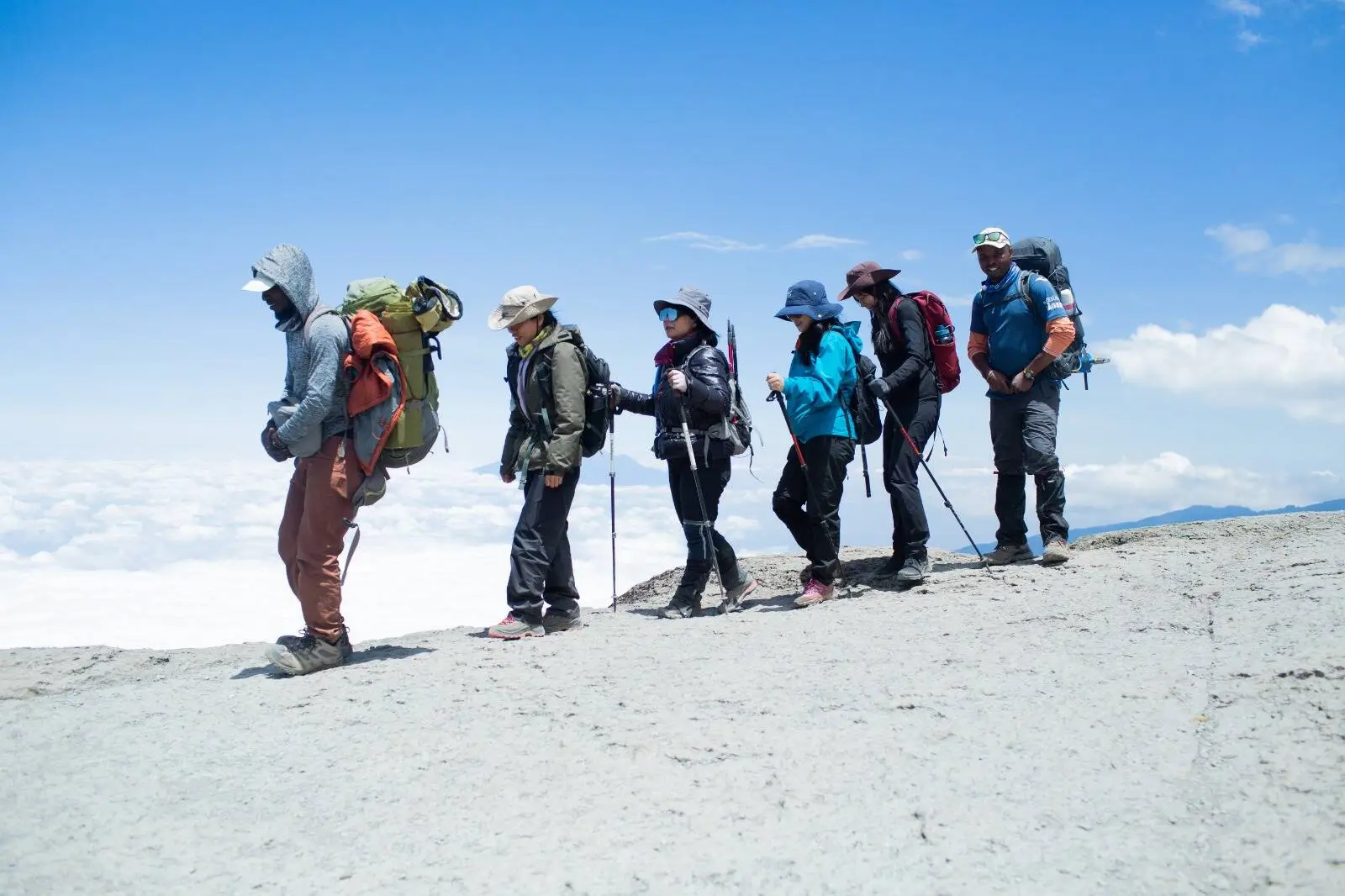
But your summit experience is also the result of a team effort.
Someone prepared your meals.
Someone carried equipment to the next camp.
Someone prepared your tent.
Someone monitored your progress.
Someone encouraged you when the trail became difficult.
And someone helped guide you safely toward the summit.
Your Kilimanjaro achievement is personal, but the journey is shared.
Final Thoughts: Meet the People Behind Your Kilimanjaro Adventure
A Kilimanjaro trek is about much more than reaching Africa’s highest point.
It is about the mountain, the landscape, the challenge, the friendships and the people who make the experience possible.
Your Kilimanjaro local guides, chefs and porters are an essential part of that story.
By choosing a responsible trekking company and treating the mountain crew with respect, you can help make your adventure positive not only for yourself but also for the Tanzanian professionals who work on Kilimanjaro.
At Trek and Hide Adventures, we are proud of the people behind our mountain expeditions.
Climb with purpose. Trek with respect. Experience Kilimanjaro with a local team that helps turn the journey into a lasting memory.