Serengeti Migration Safari
Wildebeest Migration Safari Experience
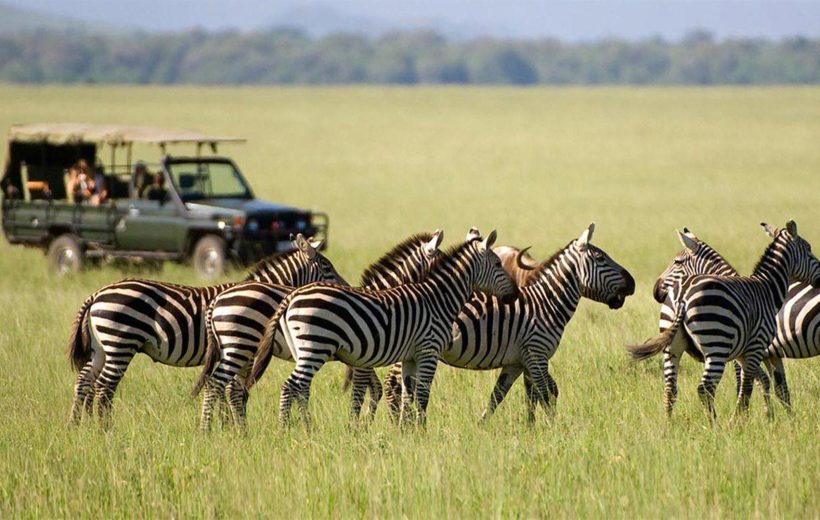
Experience one of Africa’s greatest wildlife spectacles on a Wildebeest Migration Safari in Tanzania’s Serengeti. Witness thousands of wildebeest, zebras, and gazelles moving across the endless plains in search of fresh grass and water. Depending on the season, you may see dramatic river crossings, huge herds gathering on the open plains, or newborn calves taking their first steps during the calving season.
A migration safari is more than simply watching animals move. It is an opportunity to experience nature at its most unpredictable, with predators such as lions, cheetahs, hyenas, and crocodiles following the herds. Your experienced safari guide will help you find the best wildlife-viewing areas while sharing fascinating information about the migration and the Serengeti ecosystem.
Each season offers something different, making the Wildebeest Migration a remarkable experience for first-time visitors, families, couples, and wildlife enthusiasts. From the excitement of river crossings to the peaceful sight of thousands of animals spread across the plains, every day brings the possibility of a memorable wildlife
Experience Highlights
The Great Migration
Follow the incredible journey of thousands of wildebeest, zebras, and gazelles as they move through the Serengeti ecosystem.
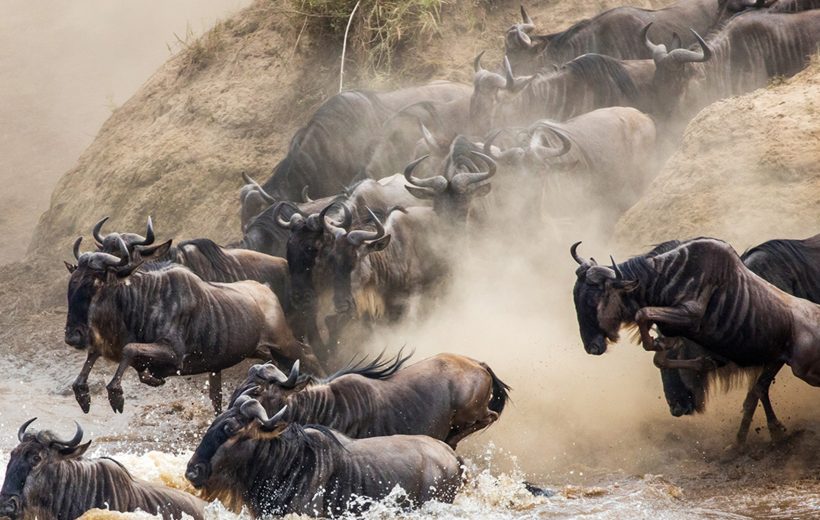
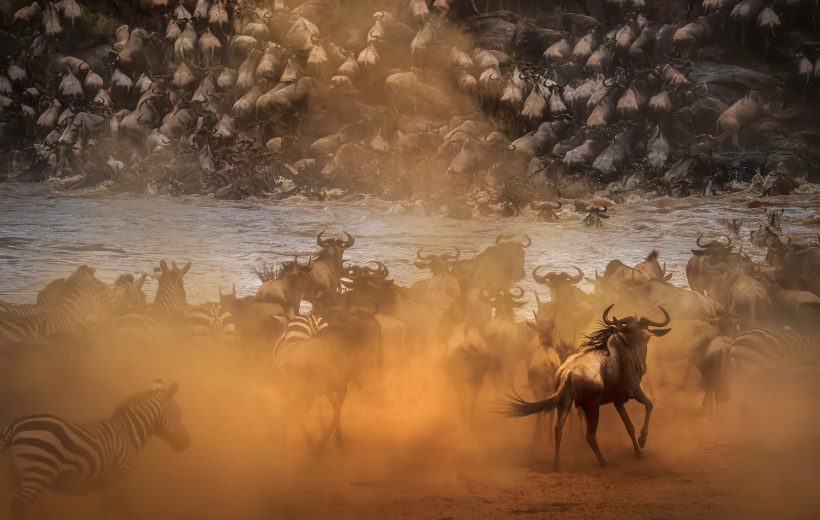
Dramatic River Crossings
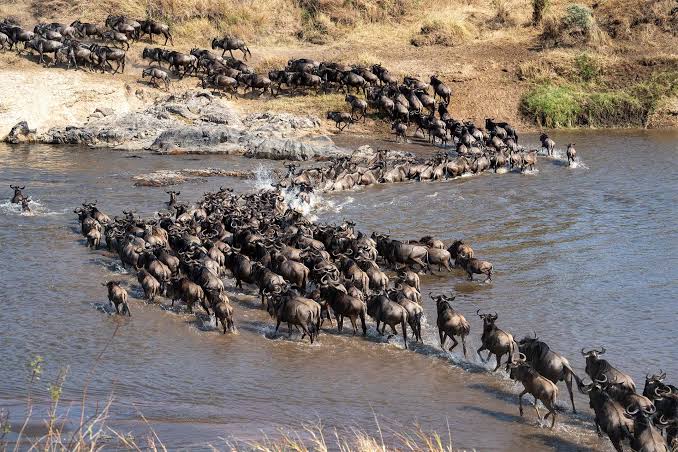
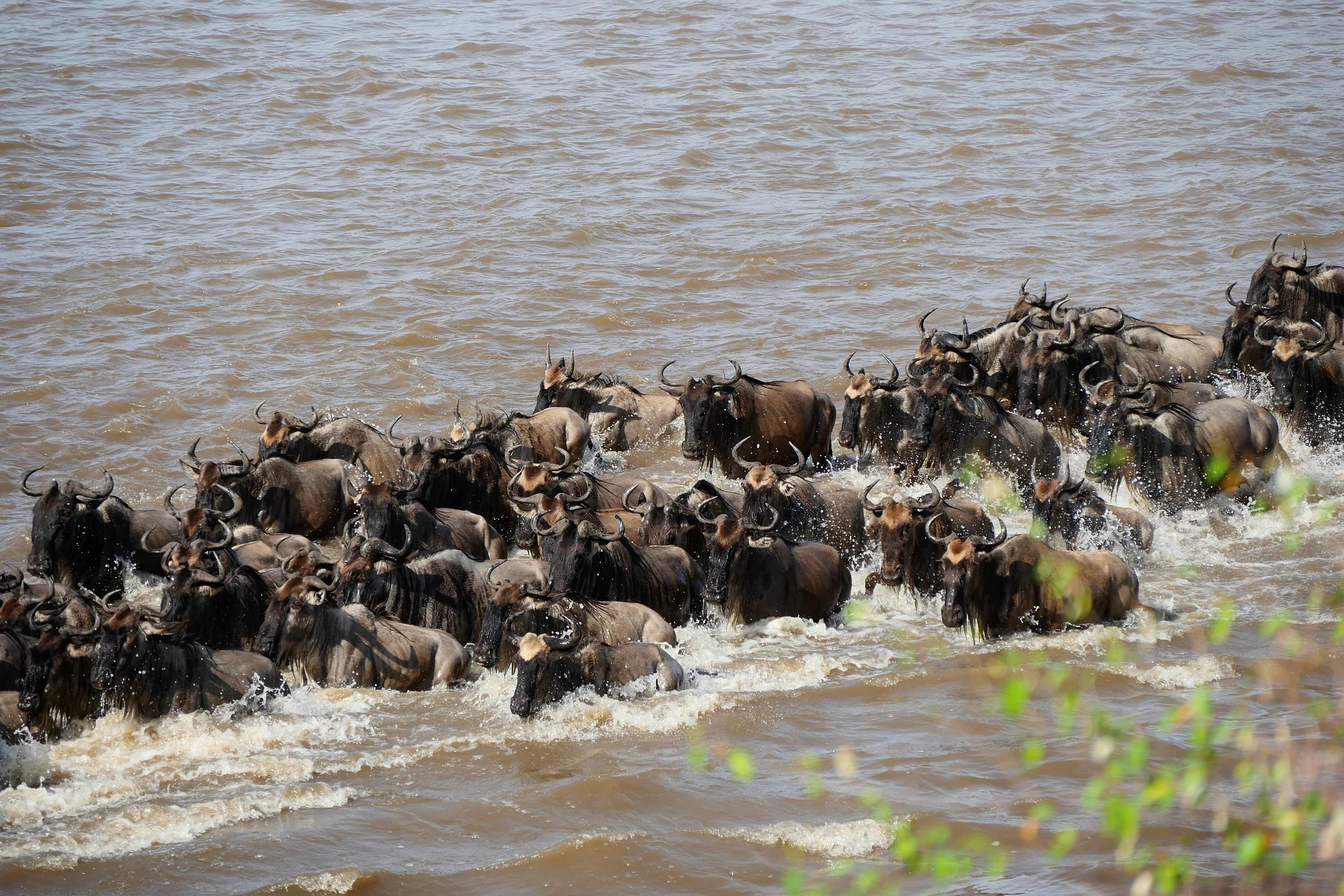
During the migration season, witness powerful moments as herds attempt to cross rivers while facing strong currents and waiting predators.
Calving Season
Visit the southern Serengeti during the calving period to see newborn wildebeest and the intense predator activity that follows.
Predator Encounters
Look for lions, cheetahs, leopards, hyenas, and other predators that closely follow the migrating herds.
The Great Serengeti Migration in detail
If you are planning a Serengeti safari, witnessing the Great Migration is likely high on your list. But can you guarantee that you will be in the right place at the right time? Unfortunately, there is no absolute guarantee. Choosing when to visit the Serengeti always comes with some uncertainty, as the migration is influenced by natural conditions, particularly rainfall. While the migration generally follows a familiar yearly pattern, the exact timing and location can change from one year to another.
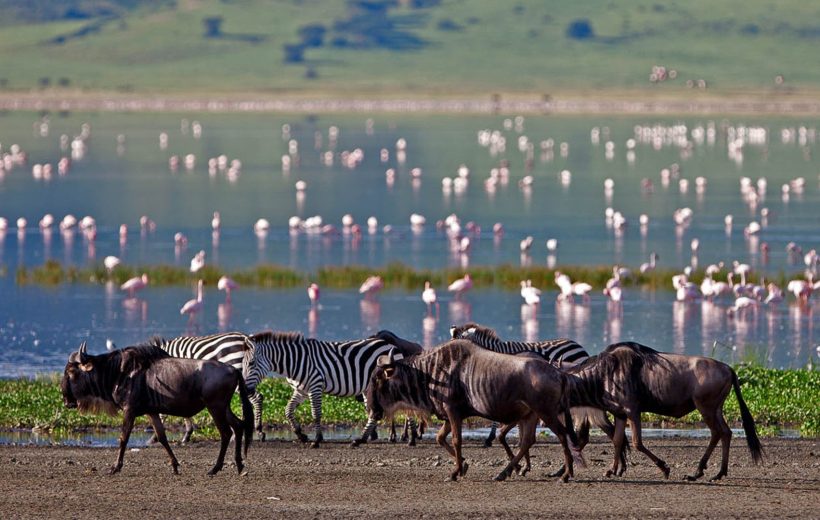
The Great Migration is one of Africa’s most remarkable wildlife experiences. Around two million wildebeest, together with large numbers of zebras, Thomson’s gazelles, Grant’s gazelles, and elands, move across the Serengeti ecosystem in search of fresh grazing and water. This incredible natural cycle is widely regarded as one of the greatest wildlife spectacles in Africa and around the world.
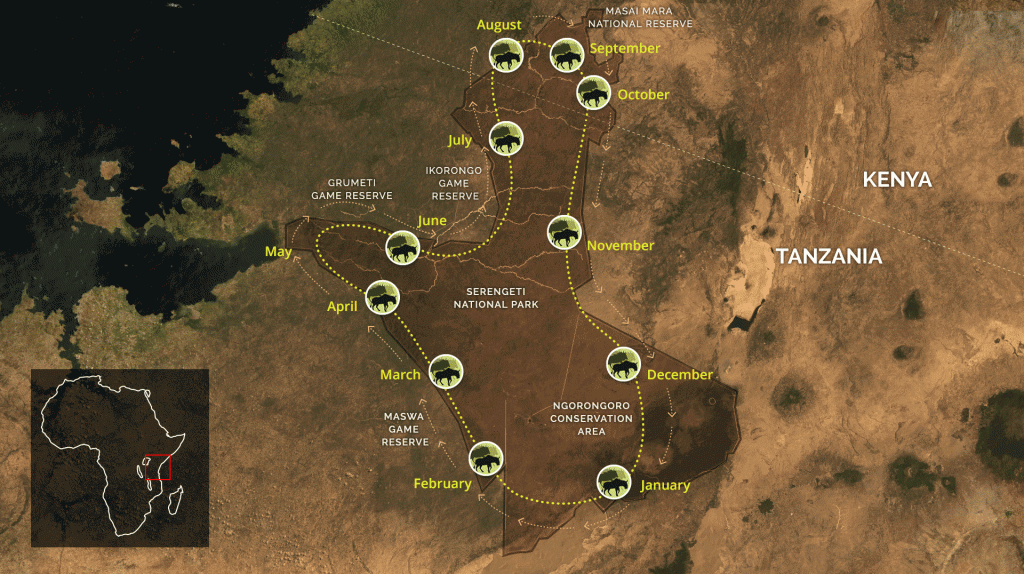
Although the route and timing can vary each year, the migration tends to follow a predictable seasonal cycle shaped mainly by rainfall and the availability of fresh grass. Understanding these seasonal movements can help you choose the best time and area of the Serengeti for your safari. The Great Migration can generally be divided into the following key periods:
DECEMBER – APRIL
During this period, the herds move through the southern Serengeti and Ndutu area, where fresh grass provides plenty of food. From January to March, this is also the calving season, making it a great time to see newborn wildebeest, zebras, and exciting predator activity.
MAY – JULY
As the dry season begins, the herds start moving north toward the Western Corridor and northern Serengeti. In June and July, large groups may cross the Grumeti River, offering dramatic wildlife encounters.
AUGUST – SEPTEMBER
The migration continues through northern Serengeti and into Kenya’s Maasai Mara. This is one of the most popular periods for witnessing wildebeest river crossings, especially around the Mara River, although the exact timing cannot be guaranteed.
OCTOBER – NOVEMBER
The herds gradually leave the northern Serengeti and begin moving south again. Short rains encourage the growth of fresh grass, bringing the animals back toward the southern Serengeti and completing another migration cycle.
Start your journey
The experiences featured on our site are just a glimpse of what’s possible. If you have a specific trip in mind or would like to create a custom experience, we’re here to help you plan a journey that’s perfect for you.
Popular Safari Tours In Tanzania
Tanzania’s safaris cater to a diverse range of preferences, whether you’re interested in game drives, hot air balloon safaris, or simply unwinding in lavish lodges. With our personalized packages, we’ve got all your needs covered.
Frequently Asked Questions
The Great Wildebeest Migration is the annual movement of around two million wildebeest, along with zebras and gazelles, across the Serengeti and Maasai Mara in search of fresh grass and water.
The best time depends on what you want to see. January to March is ideal for calving season, while July to September is popular for seeing large herds and possible Mara River crossings.
No. River crossings are natural events and cannot be guaranteed. The timing and location depend on rainfall, water levels, and the movement of the herds.
The migration can be seen in different parts of the Serengeti throughout the year. The southern Serengeti is popular during the calving season, while the Western Corridor and northern Serengeti are important areas later in the year.
A safari of 4 to 7 days is a good option for following the migration and exploring different areas of the Serengeti. Longer safaris give you more flexibility to follow the herds and enjoy other wildlife destinations.