
Kilimanjaro Full Moon Climb 2027–2029: Best Dates, Benefits & Complete Planning Guide
Plan your Kilimanjaro Full Moon Climb 2027–2029 with Trek and Hide Adventures. Discover the best dates, top routes, climbing benefits, preparation tips, and everything you need for an unforgettable summit under the full moon.
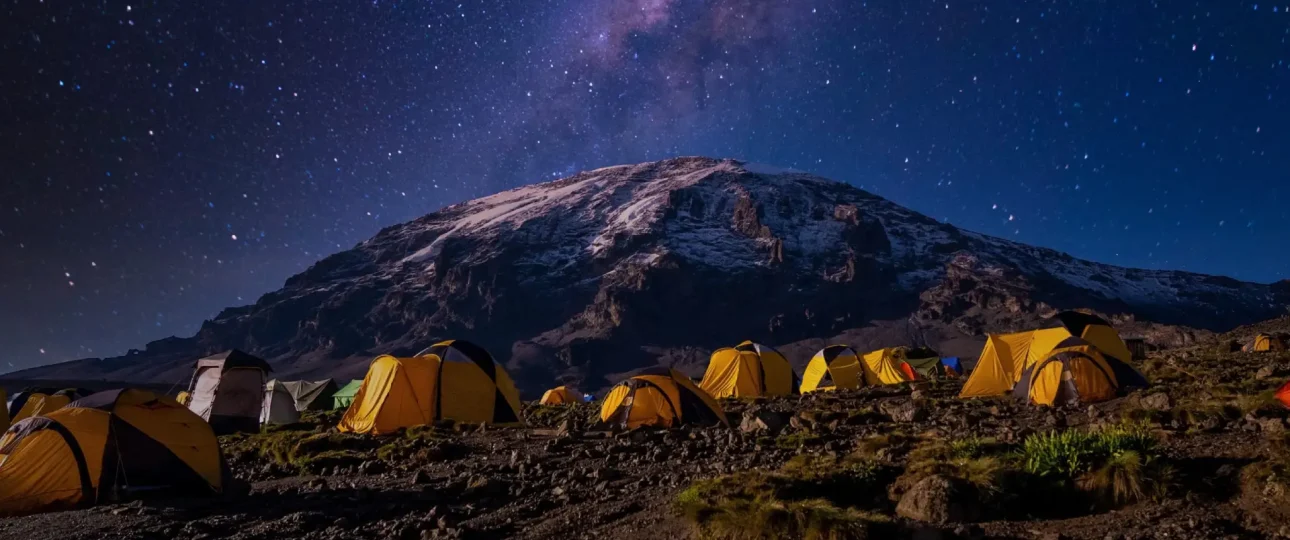
Every year, thousands of adventurers travel to Tanzania with one shared dream—standing on the summit of Mount Kilimanjaro, the highest mountain in Africa. While every climb offers unforgettable memories, timing your expedition to coincide with a full moon transforms the experience into something truly extraordinary. Walking beneath a bright moonlit sky, watching Kilimanjaro’s glaciers shimmer in natural light, and witnessing sunrise from Uhuru Peak are moments that few places on Earth can offer.
A Kilimanjaro Full Moon Climb is one of the most sought-after trekking experiences because it combines the excitement of summiting Africa’s highest mountain with the beauty of a naturally illuminated landscape. During the final ascent, many climbers find themselves relying less on their headlamps as the moon casts a soft glow across the trail, creating spectacular views of the surrounding volcanic terrain and ice-covered summit.
If you are planning your Mount Kilimanjaro adventure in 2027, 2028, or 2029, this guide explains everything you need to know—from choosing the right departure date and selecting the best climbing route to understanding why a full moon climb is so popular among trekkers from around the world.
At Trek and Hide Adventures, we organize professionally guided Full Moon Kilimanjaro expeditions designed to provide excellent acclimatization, outstanding safety standards, and unforgettable summit experiences.
What Is a Kilimanjaro Full Moon Climb?
A Kilimanjaro Full Moon Climb is a trek scheduled so that your summit attempt takes place on or very close to the night of a full moon. Since the final ascent to Uhuru Peak (5,895 metres / 19,341 feet) usually begins shortly before midnight, the bright moon naturally illuminates much of the trail, making the journey feel even more magical.
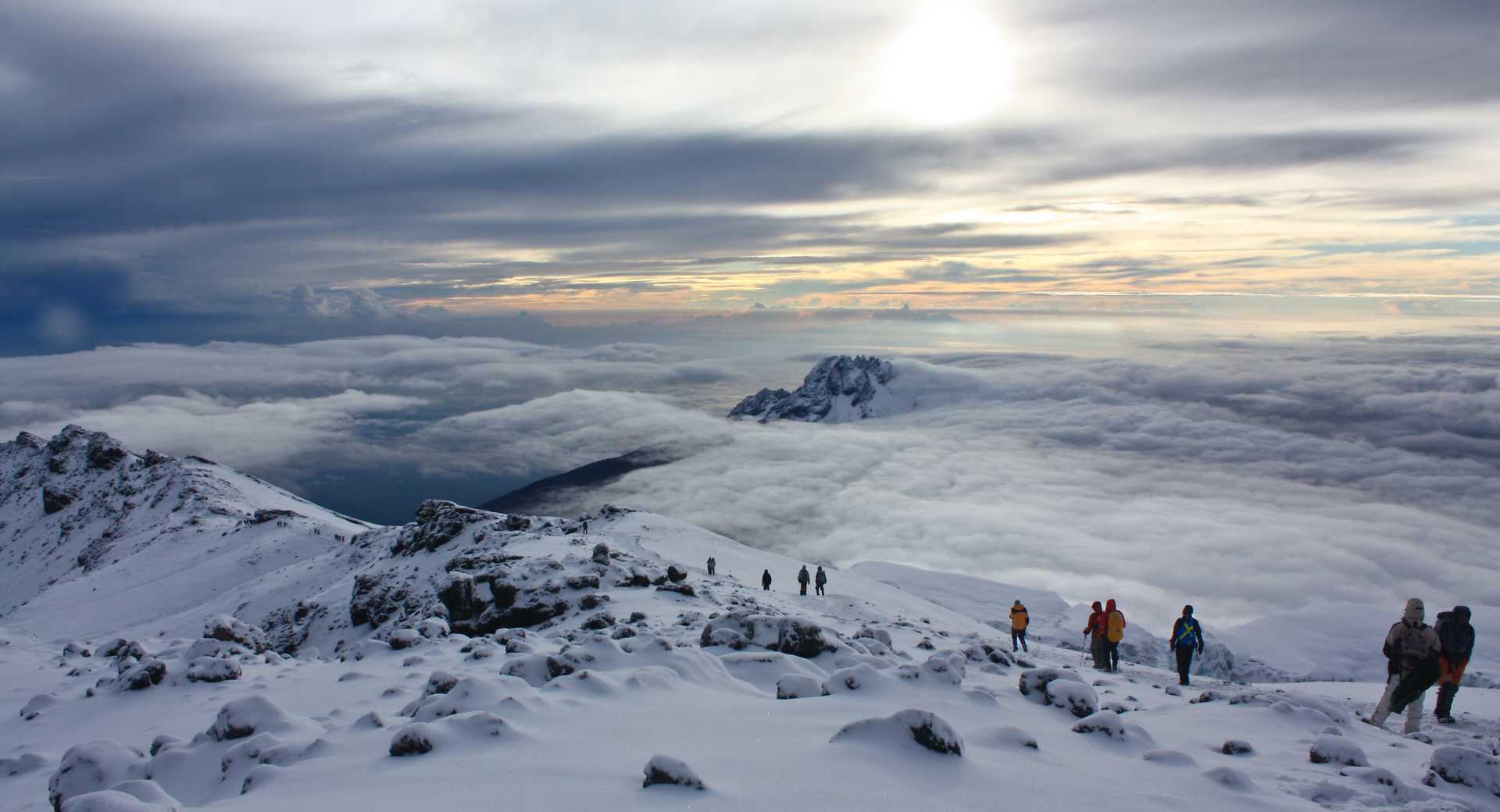
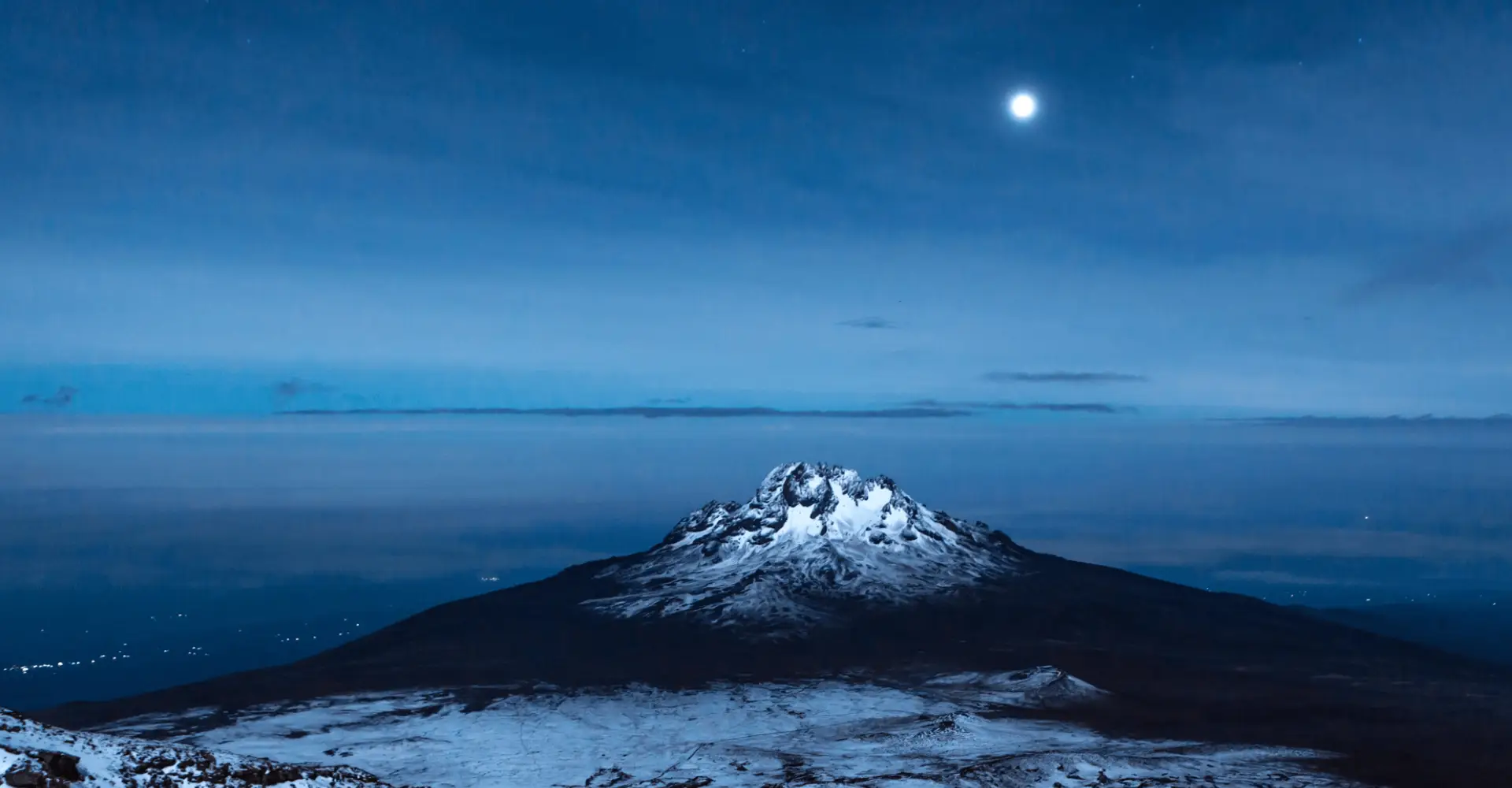
Rather than hiking through complete darkness, climbers enjoy wide panoramic views of glaciers, volcanic rock formations, distant valleys, and the silhouette of Mawenzi Peak beneath a brilliant night sky. The experience is often described as peaceful, inspiring, and unlike any other mountain climb.
The full moon does not change the route itself, but it changes how you experience the mountain, making summit night feel brighter, more open, and visually spectacular.
Why Do So Many Climbers Choose a Full Moon Trek?
One of the main reasons climbers choose a Full Moon Kilimanjaro expedition is the extraordinary scenery. The combination of moonlight, snow-covered glaciers, and clear skies creates breathtaking views throughout the summit ascent.
As you slowly climb toward Uhuru Peak, you’ll see the moon reflecting off the mountain’s ice fields while countless stars fill the African sky above. When dawn arrives, the landscape changes once again as the first rays of sunlight illuminate the glaciers and the plains stretching far below.
Beyond the scenery, many climbers appreciate the psychological comfort that comes with increased visibility. Although everyone still carries a headlamp for safety, the natural moonlight allows you to see much farther than on a typical summit night, making the climb feel less confined and more enjoyable.
For photographers, this is one of the best opportunities to capture unique images of Mount Kilimanjaro under natural lunar light.
Does a Full Moon Make Climbing Kilimanjaro Easier?
A common misconception is that climbing during a full moon is physically easier. In reality, the challenge of climbing Mount Kilimanjaro remains exactly the same regardless of the moon phase.
The mountain’s greatest challenge is altitude, not darkness. Reduced oxygen levels affect every climber in the same way, whether the sky is illuminated by a full moon or completely dark.
What the full moon does provide is improved natural visibility, which many trekkers find mentally encouraging during the demanding summit ascent. Seeing the trail, surrounding landscape, and fellow climbers more clearly often makes the experience feel more rewarding.
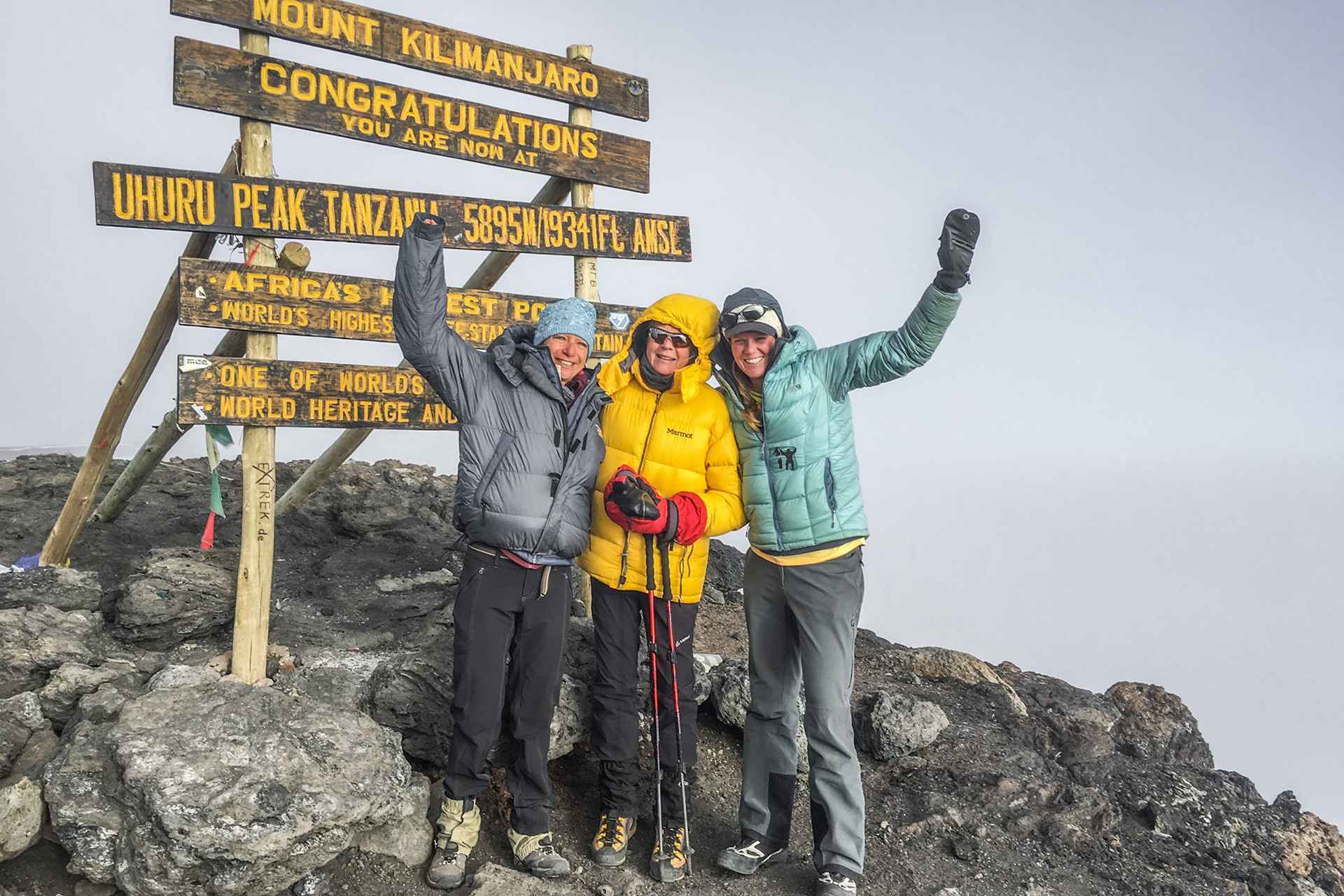
Your chances of reaching the summit depend far more on proper acclimatization, physical preparation, hydration, choosing an appropriate itinerary, and climbing with experienced local guides than on the phase of the moon.
Best Kilimanjaro Routes for a Full Moon Climb
Every official Kilimanjaro route can be scheduled around the full moon, but some routes are particularly well suited to this special experience because they provide better acclimatization and more scenic viewpoints.
Lemosho Route
The Lemosho Route is widely regarded as one of the finest options for a Full Moon Kilimanjaro Climb. Its gradual ascent, beautiful scenery, and seven- to eight-day itineraries allow climbers to acclimatize properly while enjoying forests, moorlands, alpine deserts, and panoramic mountain views before reaching the summit.
Machame Route
Often referred to as the “Whiskey Route,” the Machame Route combines dramatic scenery with excellent acclimatization opportunities. It remains one of the most popular choices for climbers hoping to experience the mountain beneath a full moon.
Northern Circuit
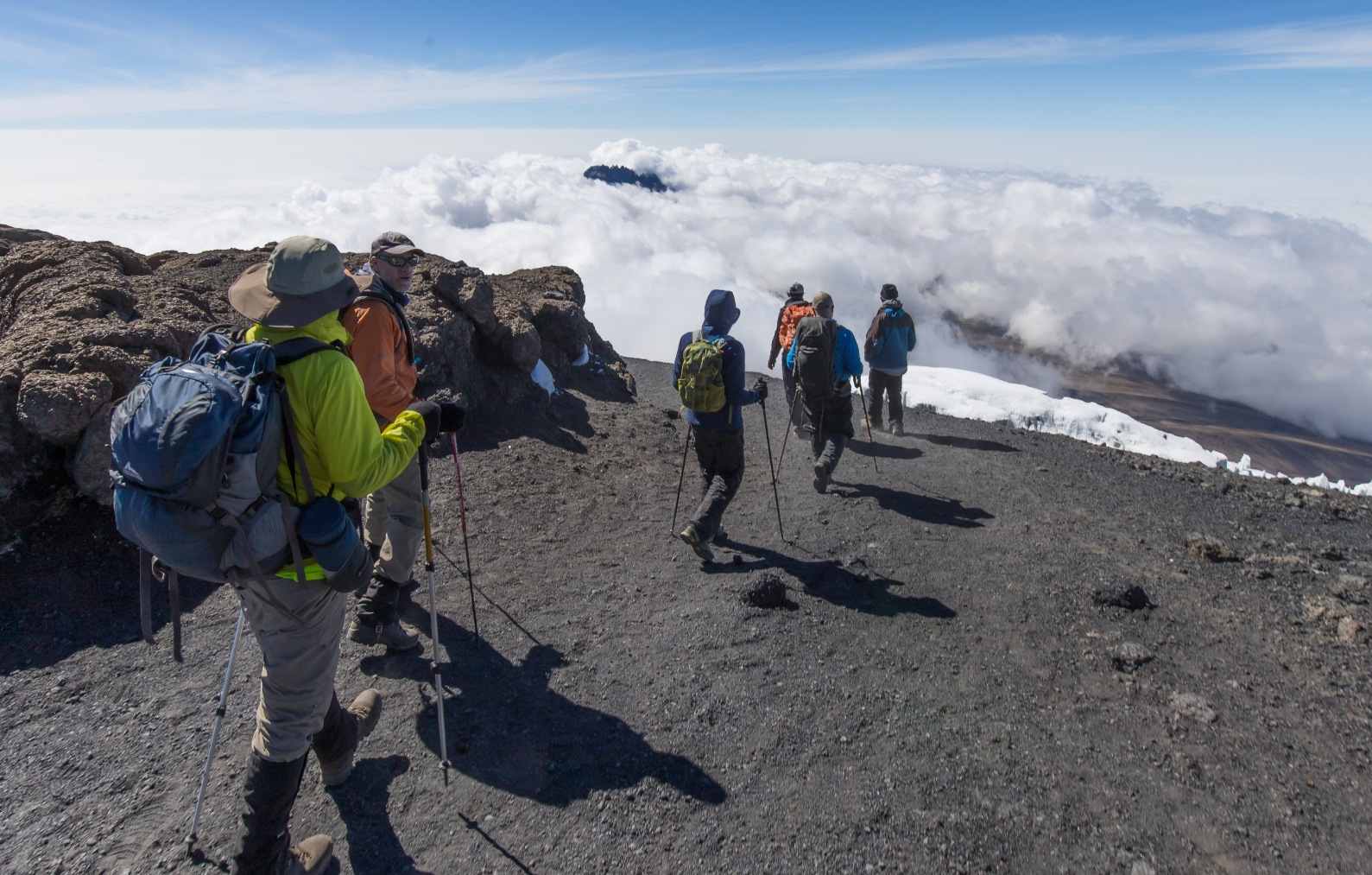
The Northern Circuit offers the longest route on Mount Kilimanjaro and one of the highest summit success rates. Its extended itinerary allows plenty of time for acclimatization while taking trekkers through quieter sections of the mountain with spectacular panoramic scenery.
Rongai Route
Approaching Kilimanjaro from the northern side near the Kenyan border, the Rongai Route offers a quieter trekking experience and often enjoys drier conditions during certain times of the year. It is an excellent option for climbers looking for fewer crowds.
Kilimanjaro Full Moon Dates for 2027, 2028 & 2029
A full moon occurs approximately once every 29.5 days, providing monthly opportunities to plan a special Kilimanjaro summit. However, your trek should not begin on the full moon itself.
Instead, your departure date is carefully calculated so that your summit night coincides with the full moon. For example, climbers choosing the eight-day Lemosho Route generally begin their expedition about seven days before the scheduled full moon.
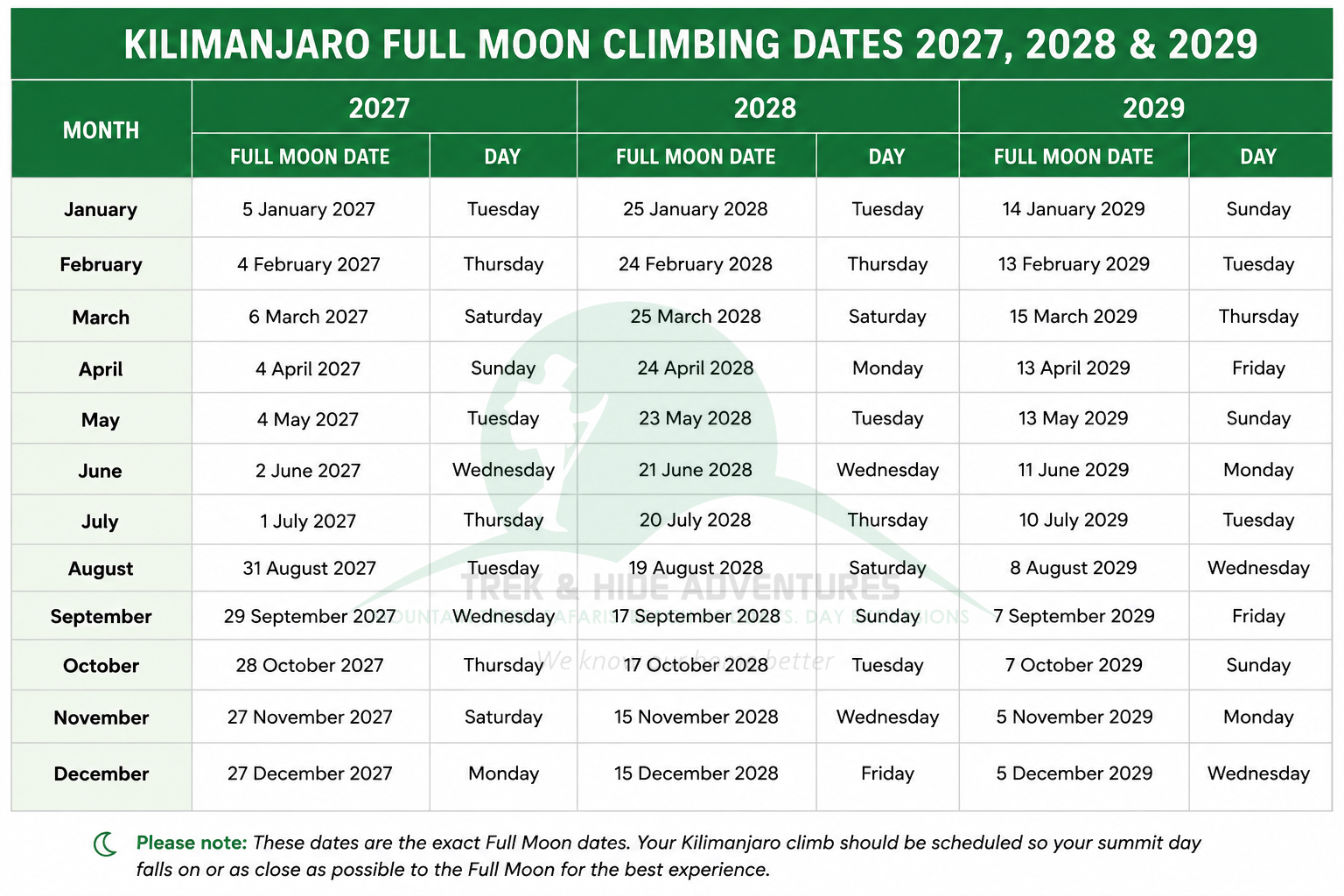
This is one of the reasons why booking through an experienced Kilimanjaro operator is important. At Trek and Hide Adventures, we help guests select departure dates that align perfectly with their chosen route and the lunar calendar, maximizing the chance of summiting beneath a brilliantly illuminated sky.
When Is the Best Time of Year for a Full Moon Climb?
Although a full moon occurs every month, weather conditions play an important role in determining the overall climbing experience.
The dry seasons from January to March and June to October are generally considered the best times to climb Mount Kilimanjaro. These months often provide clearer skies, lower rainfall, and better visibility, allowing climbers to fully appreciate the beauty of a moonlit summit.
Because Full Moon departures during these periods are especially popular, booking several months in advance is highly recommended.
Preparing for Your Full Moon Adventure
Preparing for a Full Moon Kilimanjaro Climb is similar to preparing for any high-altitude expedition. Building cardiovascular fitness, strengthening your legs, and completing regular hiking practice before your trip will help you enjoy the experience more comfortably.
Proper equipment is equally important. Layered clothing, waterproof outerwear, insulated gloves, warm hats, quality hiking boots, and trekking poles all contribute to a safer and more comfortable climb.
Although moonlight provides remarkable visibility, every climber should still carry a reliable headlamp with spare batteries, as clouds and changing weather conditions can temporarily reduce natural light.
Why Choose Trek and Hide Adventures?
At Trek and Hide Adventures, we believe that climbing Mount Kilimanjaro should be more than simply reaching the summit—it should be a life-changing adventure.
Our experienced local guides carefully plan every Full Moon Kilimanjaro expedition to ensure the itinerary aligns with the lunar calendar while allowing enough time for proper acclimatization. From your arrival at Kilimanjaro International Airport to your successful summit and descent, our dedicated mountain team is committed to providing professional guidance, exceptional service, and the highest safety standards.
Whether you choose the scenic Lemosho Route, the popular Machame Route, the peaceful Rongai Route, or the panoramic Northern Circuit, we help you experience Mount Kilimanjaro at its most spectacular.
Final Thoughts
A Kilimanjaro Full Moon Climb is one of the most remarkable trekking experiences available anywhere in the world. The opportunity to walk beneath brilliant moonlight, admire Kilimanjaro’s glaciers glowing against the night sky, and greet the sunrise from Africa’s highest point creates memories that last forever.
Planning your expedition around the full moon requires careful timing, expert guidance, and the right itinerary. By choosing a reputable local operator, allowing sufficient time for acclimatization, and preparing properly for the mountain, you’ll greatly improve your chances of enjoying both a successful summit and an unforgettable adventure.
At Trek and Hide Adventures, we’re proud to help climbers from around the world experience the magic of a Full Moon Kilimanjaro Climb. Whether you’re planning your expedition in 2027, 2028, or 2029, our experienced team is ready to guide you every step of the way to the Roof of Africa.