
Kilimanjaro Training Programme: How to Prepare for Your Mount Kilimanjaro Climb
Kilimanjaro Training Programme: Learn how to prepare for your climb with hiking, strength, endurance, altitude acclimatization, equipment and practical training tips.
Climbing Mount Kilimanjaro is an achievable goal for many healthy and reasonably fit travelers, but reaching Uhuru Peak at 5,895 metres (19,341 feet) requires more than simply being able to walk long distances. A well-structured Kilimanjaro training programme can help you build endurance, leg strength, confidence and the ability to stay comfortable during long days on the mountain.
Tanzania National Parks (TANAPA) notes that people of normal health and fitness can climb Kilimanjaro without specialist mountaineering equipment, while emphasizing the importance of appropriate clothing and footwear, patience, determination, slow walking and allowing additional days for acclimatization.
At Trek and Hide Adventures, we encourage trekkers to prepare progressively rather than attempting intense training immediately before departure. The objective is not to become an elite athlete. It is to arrive in Tanzania strong, comfortable walking for several hours and prepared for the demands of high altitude.
Why Is Training Important for Kilimanjaro?
A Kilimanjaro climb is a multi-day trekking experience rather than a technical mountaineering expedition. However, the physical demands increase as the trek progresses.
You may spend several consecutive days walking on uneven terrain, climbing and descending steep sections, carrying a daypack and dealing with changing weather conditions. Summit night presents an additional challenge because you typically begin walking during the night after several days of trekking.
Good physical preparation can make the experience more enjoyable and help you manage fatigue.
Training also gives you an opportunity to test your footwear, backpack, clothing and hydration system before arriving in Tanzania.
How Fit Do You Need to Be to Climb Kilimanjaro?
You do not need to be a professional athlete or experienced mountaineer to climb Kilimanjaro.
The more important qualities are consistent endurance, reasonable leg strength, mental preparation and the ability to maintain a steady pace for extended periods.
TANAPA describes Kilimanjaro as accessible to adults of normal health and fitness and specifically advises climbers to walk slowly and allow time for acclimatization.
That said, “not technical” does not mean “easy.” Altitude is one of the biggest challenges, and physical fitness alone cannot guarantee that your body will acclimatize successfully.
How Many Weeks Should You Train for Kilimanjaro?
For most people, 8–12 weeks of structured preparation is a practical target.
If you already exercise regularly, you may need less time to build basic fitness but should still include hiking-specific training.
If you are relatively inactive, starting 12–16 weeks before your trek can provide more time to gradually improve endurance and strength.
The key is consistency. Training three or four times every week is generally more useful than completing one extremely difficult workout and then spending several days recovering.
What Should a Kilimanjaro Training Programme Include?
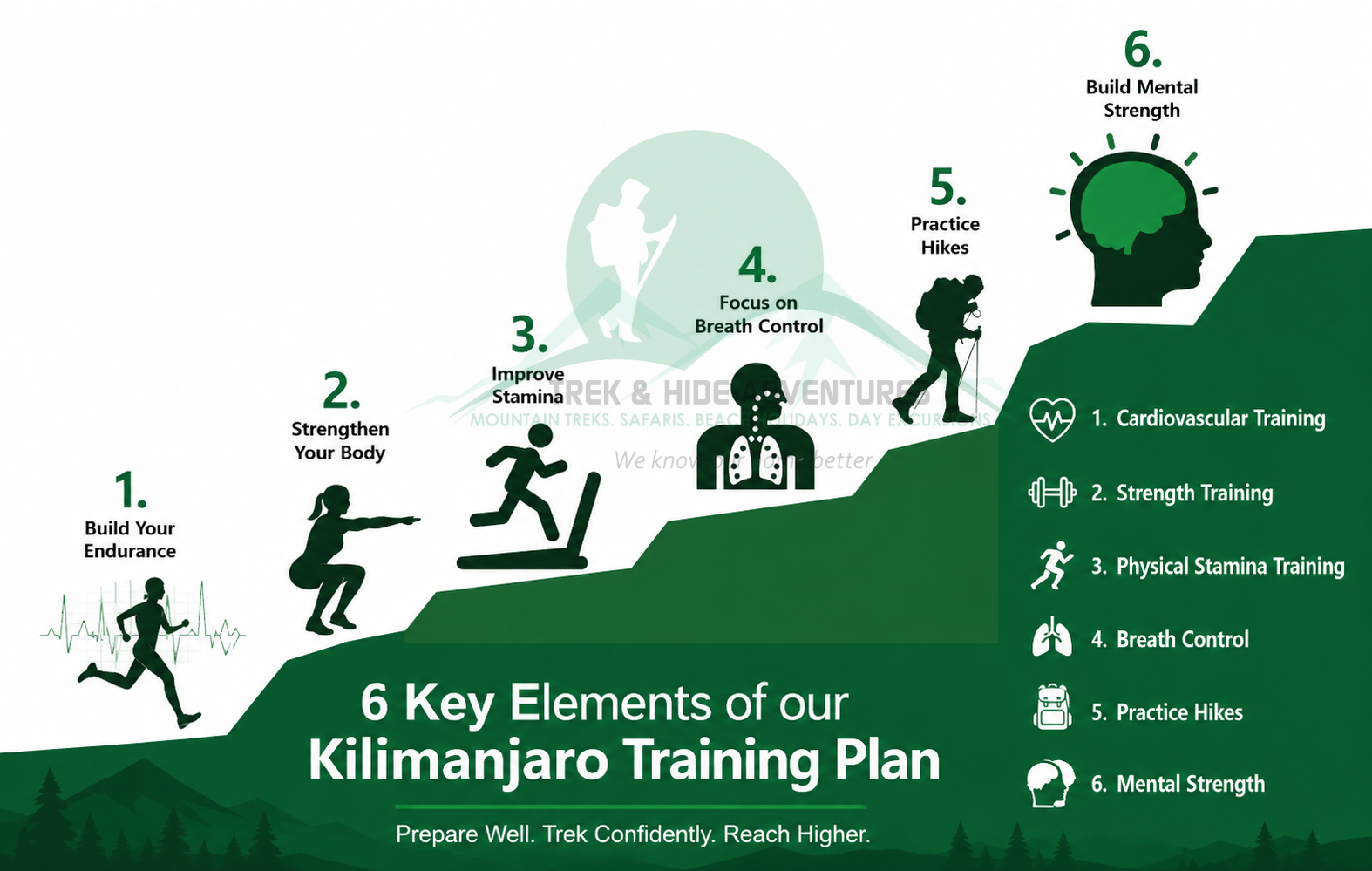
A balanced Kilimanjaro training programme should develop four main areas: cardiovascular endurance, hiking endurance, lower-body strength and core stability.
You should also gradually become comfortable walking for several hours, preferably on terrain that resembles the conditions you will encounter on the mountain.
Your programme does not need to be complicated. The most important thing is to progressively increase the duration and difficulty of your training while allowing enough recovery.
Walking and Hiking Training
Walking should form the foundation of your Kilimanjaro preparation.
Begin with comfortable walks and gradually increase both distance and duration. As your fitness improves, introduce hills, stairs and uneven terrain.
If you have access to hiking trails, use them regularly. Hill walking is particularly useful because Kilimanjaro involves significant elevation gain and loss.
A good progression might start with one- to two-hour walks and gradually build toward four- to six-hour training hikes during the later stages of your preparation.
You do not necessarily need to hike every day. Recovery is an important part of training.
Train on Hills and Inclines
Kilimanjaro is a mountain, so flat walking alone does not completely prepare your legs for the terrain.
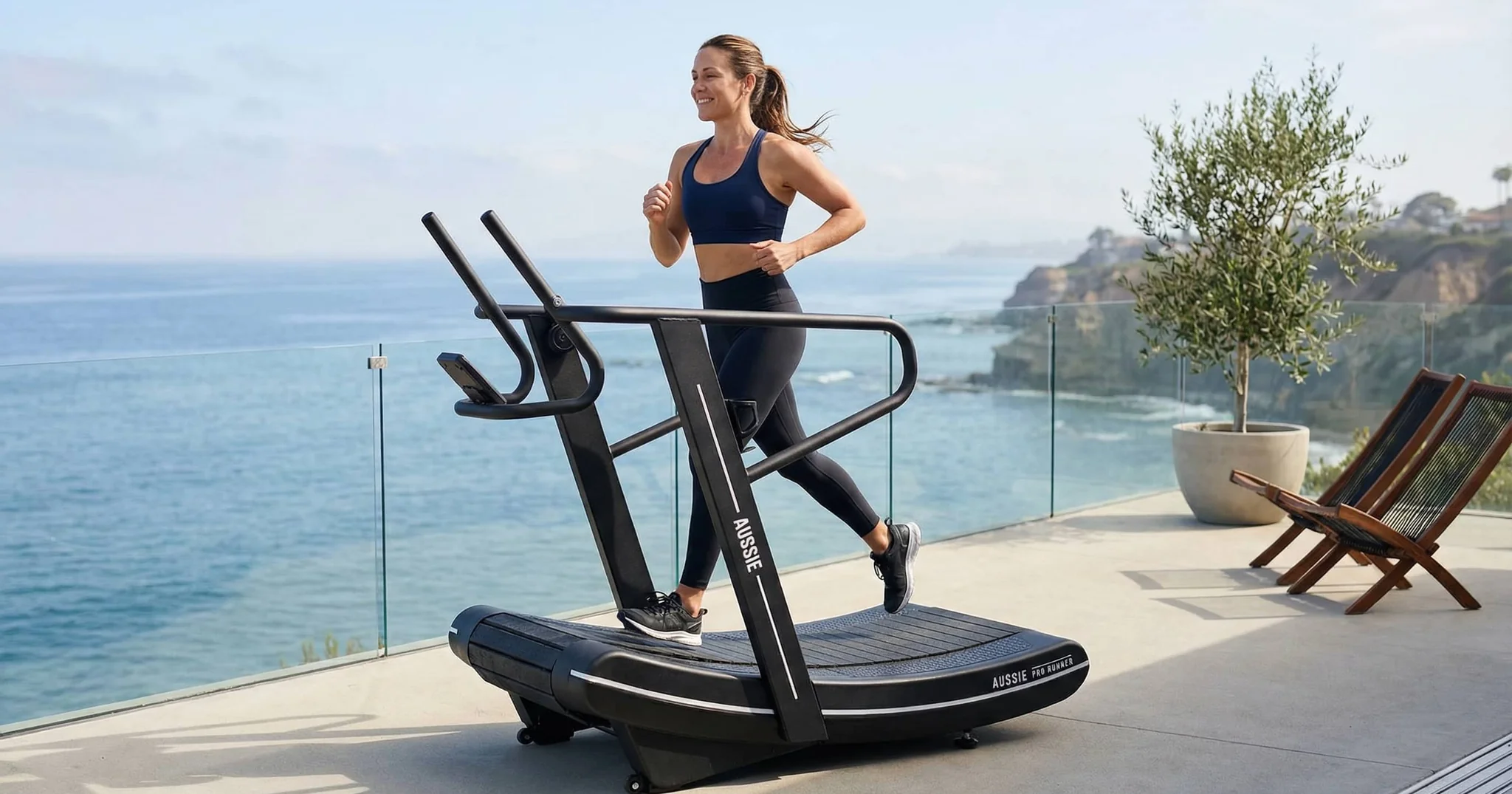
Include hills, stair climbing or treadmill incline sessions where possible.
Walking uphill develops the muscles and cardiovascular system needed for sustained climbing, while downhill training helps prepare your quadriceps for the descent.
If you live in a relatively flat area, stairs and an inclined treadmill can be useful alternatives.
Build Leg Strength
Strong legs can make long trekking days considerably more manageable.
Your strength programme can include exercises such as squats, step-ups, lunges, calf raises and controlled step-downs.
The objective is functional strength rather than maximum lifting capacity.
You want your legs to remain capable of working after several hours of walking, not simply to lift the heaviest possible weight once.
Start with manageable resistance and focus on good technique. Increase the workload gradually.
Strengthen Your Core
Core strength is often overlooked when preparing for a mountain trek.
A strong core helps you maintain stability while walking over uneven ground and carrying a backpack.
Exercises such as planks, side planks, bird dogs and controlled abdominal movements can be incorporated into your routine.
You do not need a complicated gym programme. A few consistent sessions each week can be sufficient.
Improve Cardiovascular Endurance
Cardiovascular training helps your body handle sustained physical activity.
Walking, hiking, cycling, jogging, swimming and using an elliptical machine can all contribute to your aerobic fitness.
If running is uncomfortable or unsuitable for you, there is no need to force yourself to run. Brisk walking, hill walking and cycling can provide useful cardiovascular training without excessive impact.
The goal is to improve your ability to maintain moderate activity for a long period.
Train With a Backpack
A daypack is part of the Kilimanjaro experience, so it is useful to train while carrying one.
Begin with a relatively light pack and gradually introduce the weight you expect to carry during your trek.
Avoid unnecessarily heavy training loads. The objective is to become comfortable walking with your actual trekking equipment rather than proving how much weight you can carry.
Use your training hikes to adjust your backpack, hydration system and clothing.
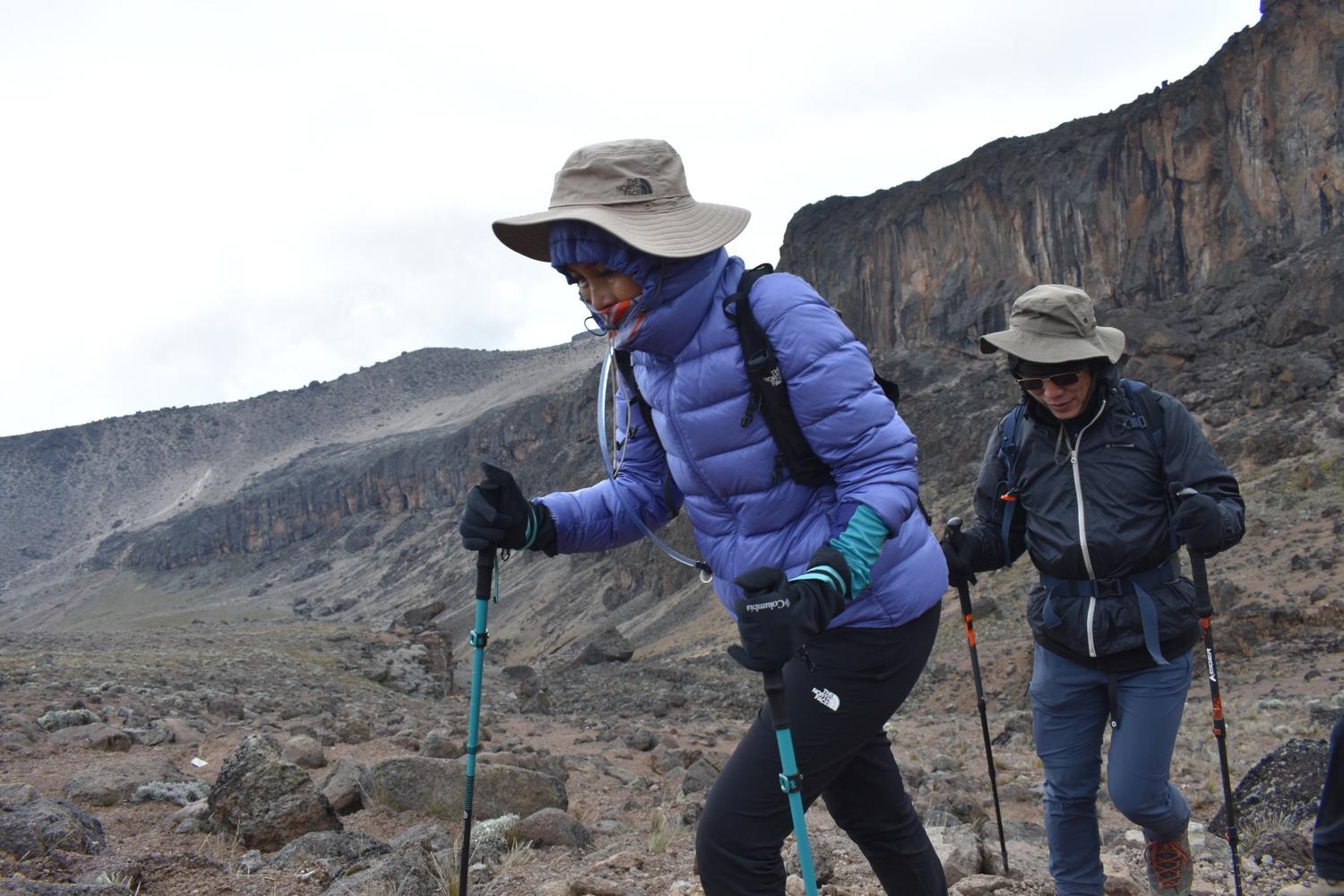
Practice Long-Day Hiking
One of the best ways to prepare for Kilimanjaro is to experience what several hours of walking actually feels like.
During the final weeks of training, include longer hikes where practical.
Pay attention to how your feet, knees, shoulders and back feel after several hours.
This is also the ideal time to test your footwear and socks. Never wait until your first day on Kilimanjaro to discover that your boots cause painful hot spots or blisters.
Train for Consecutive Days
Kilimanjaro is not a one-day hike.
Depending on the route and itinerary, you may walk on the mountain for several consecutive days. TANAPA notes that Kilimanjaro routes range from around five to nine days or longer.
If possible, occasionally schedule hiking or walking sessions on consecutive days during your preparation.
For example, you could complete a longer hike on Saturday followed by a moderate walk on Sunday.
This helps you understand how your body responds when you begin another day with some fatigue from the previous day’s activity.
Don’t Forget Downhill Training
Many people concentrate on climbing uphill and overlook the descent.
However, descending Kilimanjaro can be physically demanding, particularly on the knees and quadriceps.
Step-down exercises, downhill hiking and controlled lunges can help prepare your legs.
Good trekking poles can also provide additional stability and reduce some of the strain associated with descending.
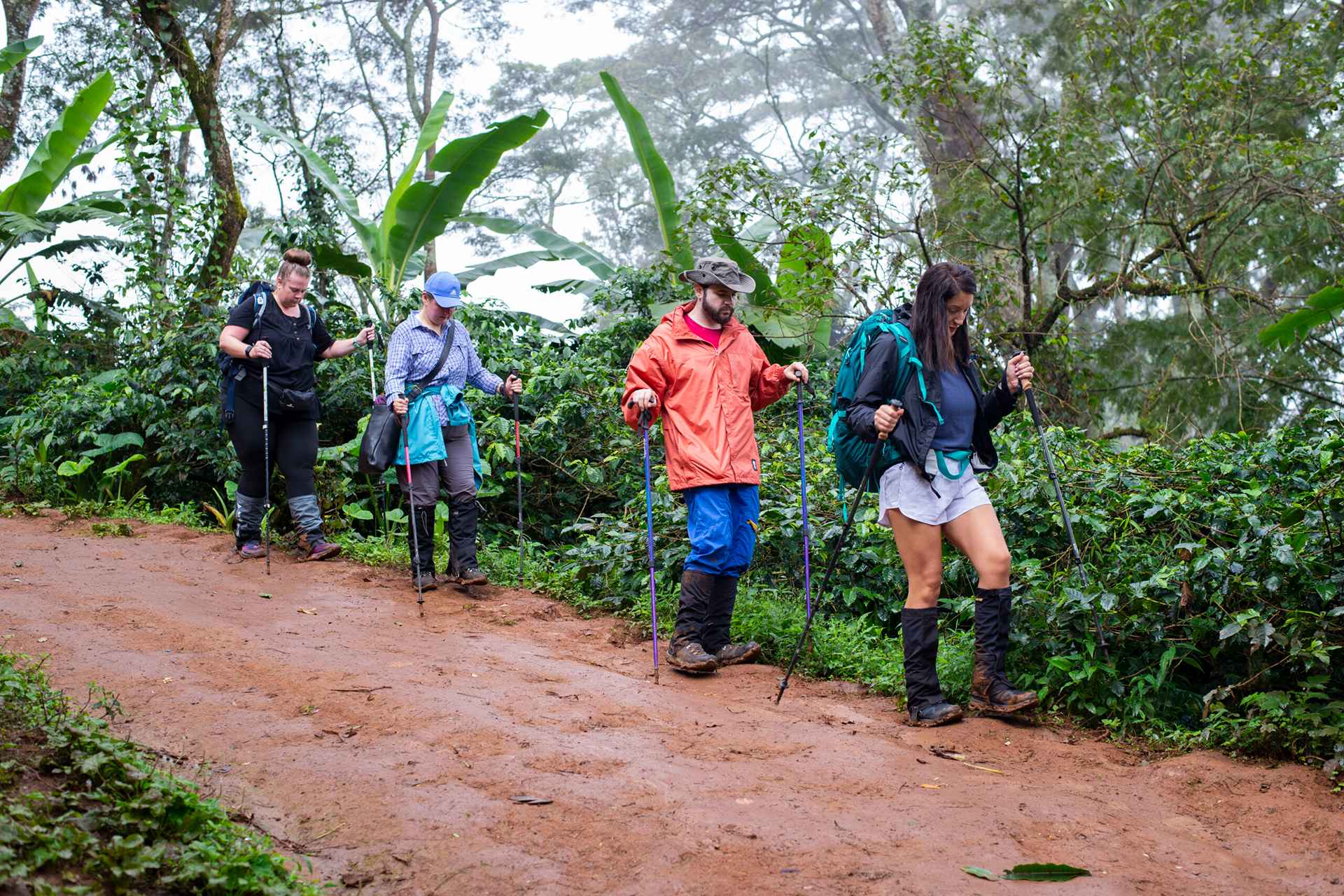
A Sample 12-Week Kilimanjaro Training Programme
A 12-week programme can be divided into three progressive phases.
Weeks 1–4: Build Your Fitness Foundation
During the first month, focus on establishing consistency.
Aim for several aerobic sessions each week combined with two strength sessions. Include regular walking and gradually introduce hills.
Your hikes do not need to be extremely long at this stage. The priority is developing a routine that you can maintain.
If you currently do very little exercise, begin gradually rather than trying to follow an advanced programme immediately.
Weeks 5–8: Increase Endurance
During the middle phase, increase the duration of your walking and hiking sessions.
Introduce more hills and uneven terrain where available.
Your strength sessions can become slightly more challenging, while longer weekend hikes can gradually become a regular part of your programme.
This is also a good period to start training with the backpack and footwear you expect to use on Kilimanjaro.
Weeks 9–11: Trek-Specific Preparation
The final major training phase should focus on hiking endurance.
Include your longest practical training hikes during this period and, where possible, walk on consecutive days.
Practice maintaining a slow, sustainable pace rather than trying to complete every hike as quickly as possible.
This is the stage when you should become increasingly comfortable spending several hours on your feet.
Week 12: Reduce Training and Recover
Do not try to become extremely fit during the final few days before your Kilimanjaro trek.
Reduce your training volume and allow your body to recover.
Light walking and gentle mobility work can help you stay active without creating unnecessary fatigue.
Arriving at the mountain rested is more valuable than arriving exhausted from last-minute training.
Example Weekly Kilimanjaro Training Schedule
A simple weekly structure could look like this:
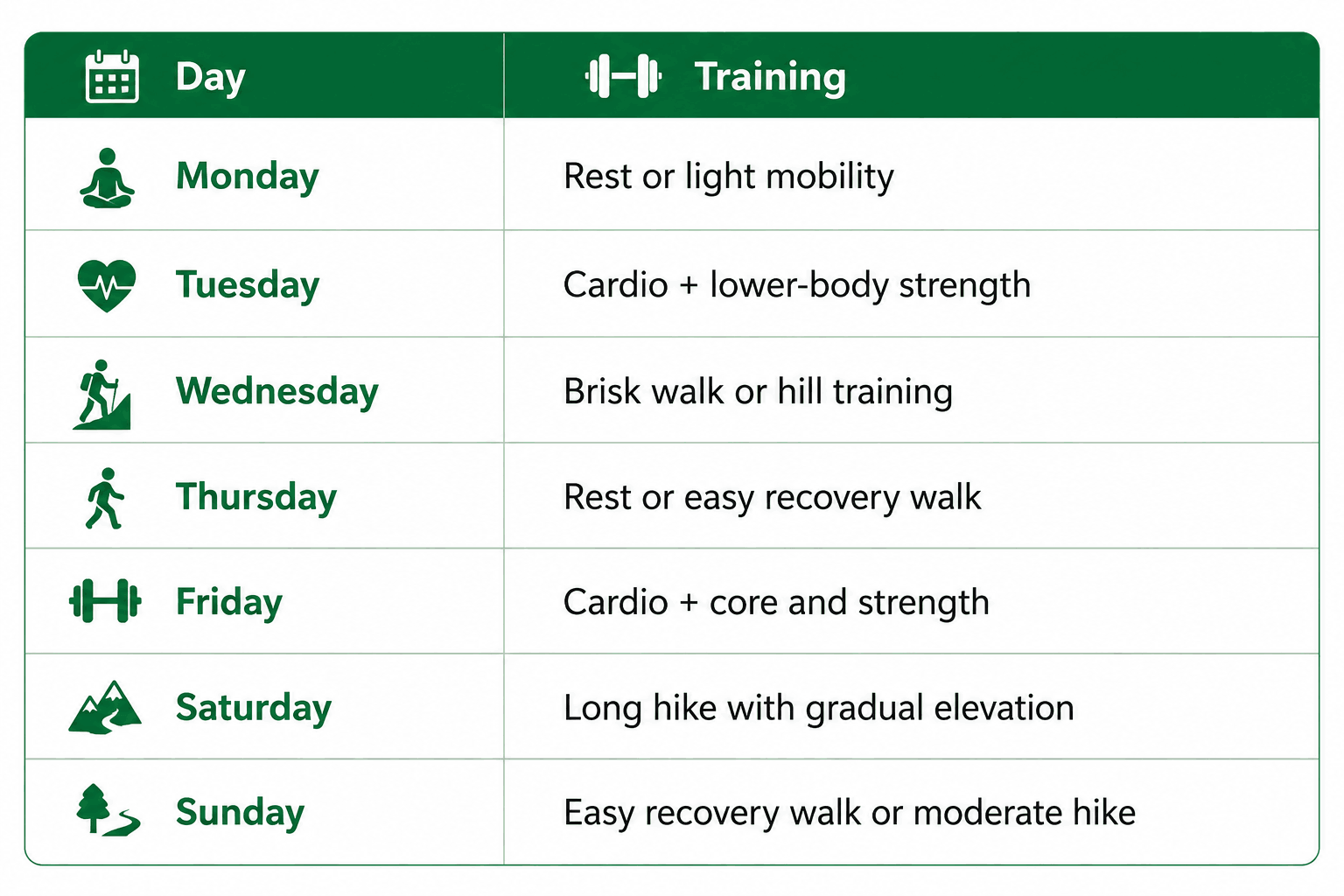
This is only an example. Your training schedule should be adapted to your current fitness, available time and any medical or physical considerations.
Should You Run to Prepare for Kilimanjaro?
Running can improve cardiovascular fitness, but you do not need to be a runner to climb Kilimanjaro.
For many trekkers, hiking and brisk uphill walking are more specific to the demands of the mountain.
If you already enjoy running, you can continue incorporating it into your training. If you do not run, there is no need to begin a high-volume running programme simply because you are preparing for Kilimanjaro.
Walking uphill for extended periods is often a more practical form of preparation.
Should You Train at High Altitude?
If you live near mountains, altitude training can provide useful experience, but it is not essential for most international Kilimanjaro trekkers.
Many travelers arrive from low-altitude environments and successfully climb Kilimanjaro through proper pacing and acclimatization.
The important point is that fitness does not prevent altitude sickness.
Someone who is extremely fit can still experience altitude-related illness.
This is why choosing an itinerary with adequate acclimatization time is so important.
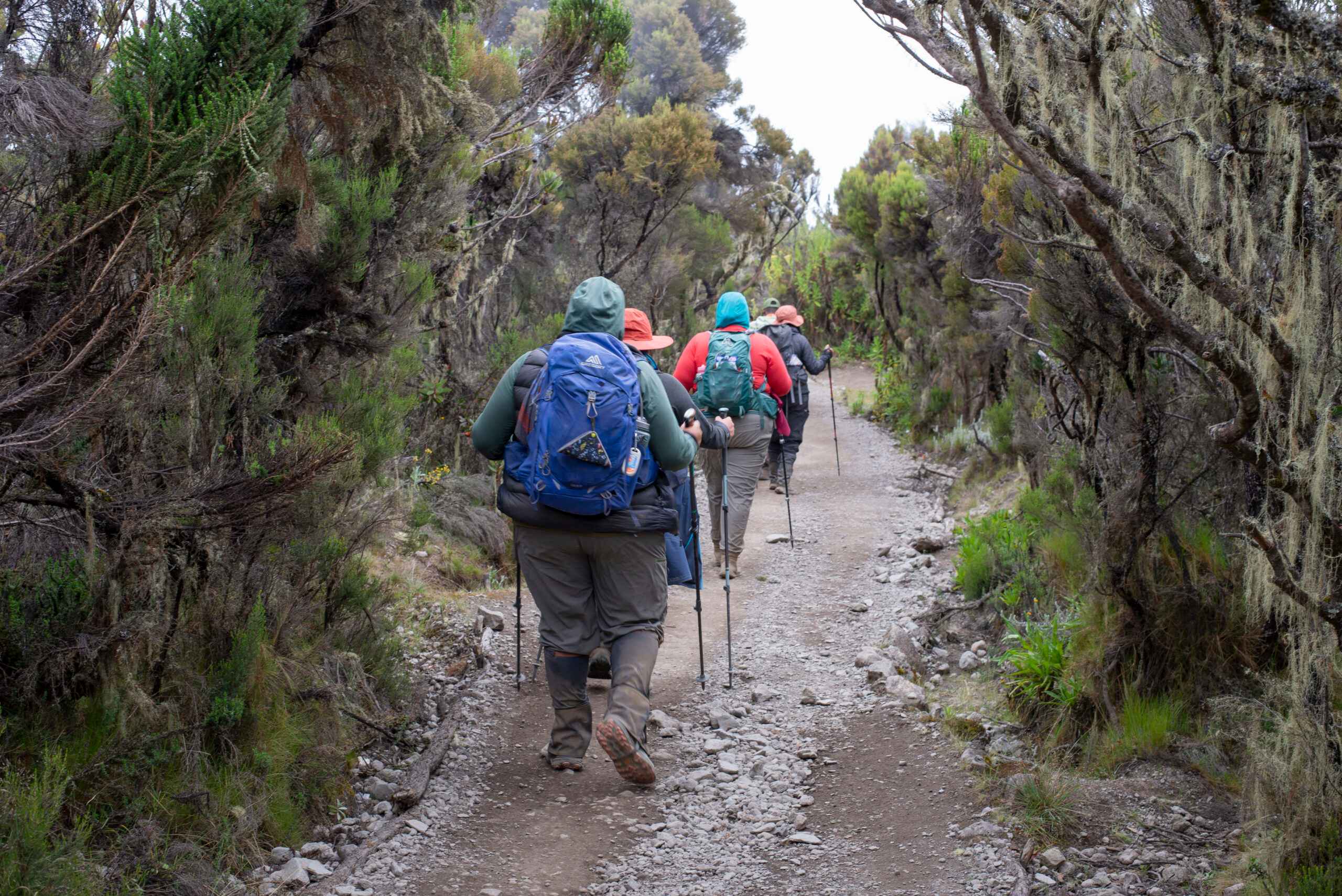
Training Cannot Replace Acclimatization
One of the most important things to understand about Kilimanjaro preparation is that you cannot train your way out of altitude sickness.
Physical fitness helps you cope with the physical demands of trekking, but acclimatization is your body’s process of adapting to reduced oxygen availability at altitude.
TANAPA specifically advises climbers to add days for acclimatization and to maintain a slow pace.
This is one reason Trek and Hide Adventures recommends carefully considering route duration rather than automatically choosing the shortest possible itinerary.
Why Longer Kilimanjaro Routes Can Be Better
A longer itinerary can provide more time for your body to adjust to increasing elevation.
Kilimanjaro offers several routes with different durations and profiles, including Machame, Lemosho, Marangu, Rongai, Northern Circuit and others.
TANAPA notes that routes range from approximately five to nine days or longer.
Rather than choosing a route solely because it is cheaper or shorter, consider the overall experience, elevation profile, daily distances and opportunities for acclimatization.
For many trekkers, spending an additional day on the mountain can be a worthwhile investment in both comfort and summit prospects.
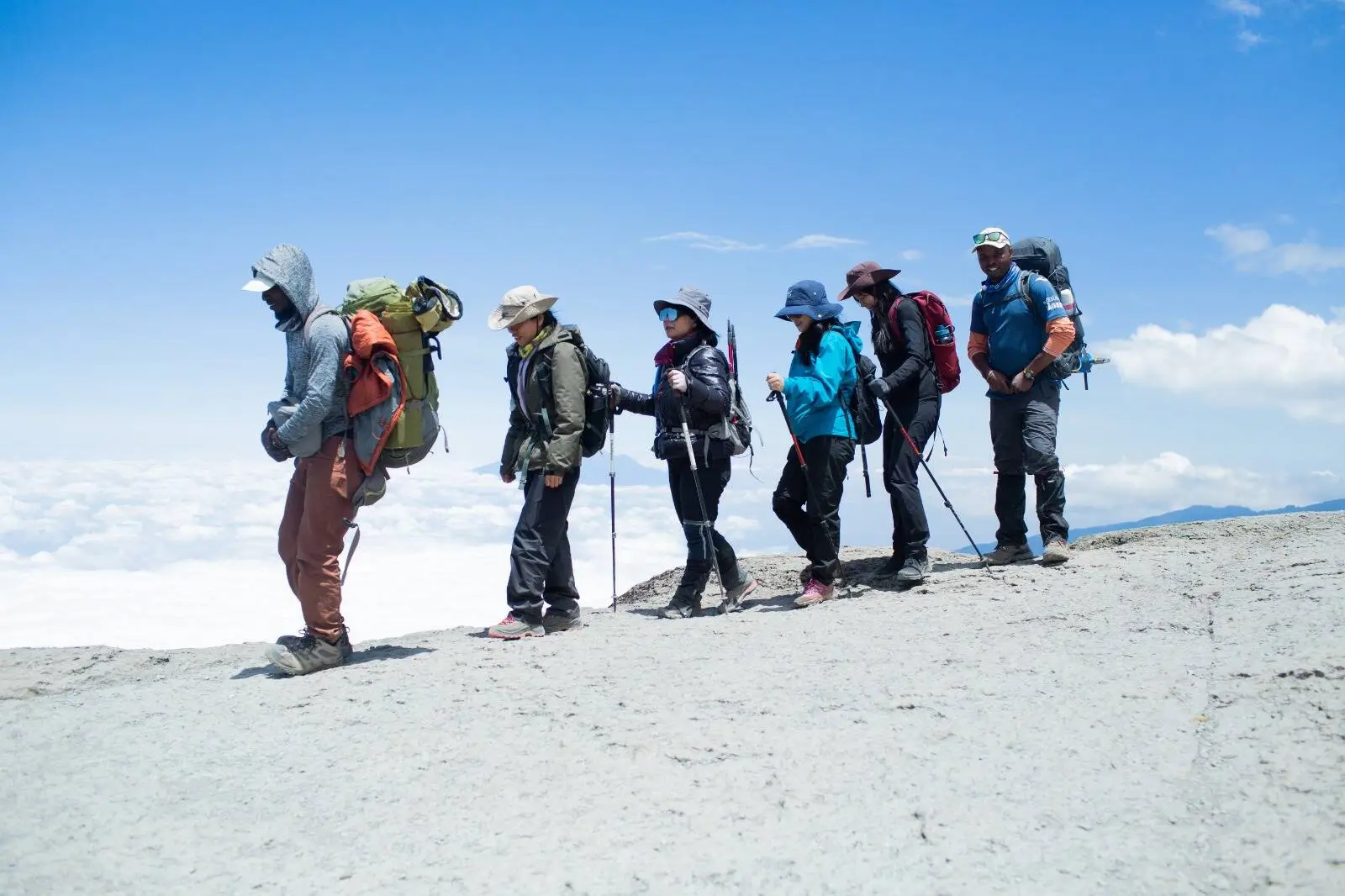
The Importance of Walking Slowly
One of the most important Kilimanjaro techniques is remarkably simple: walk slowly.
Your guide may repeatedly use the Swahili expression “pole pole,” meaning slowly, slowly.
The purpose is not to finish each day’s hike quickly. It is to conserve energy and give your body time to adjust as you climb.
TANAPA itself emphasizes walking slowly when climbing Kilimanjaro.
A person who walks at a comfortable pace and manages their energy well can often perform better than someone who starts too quickly and becomes exhausted.
Mental Preparation for Kilimanjaro
Physical fitness is only part of the preparation.
A Kilimanjaro trek can test your patience, especially during summit night when you are walking in darkness, dealing with cold temperatures and operating at very high altitude.
Mental preparation means understanding that progress may sometimes be slow.
There may be moments when you feel tired or uncomfortable. Maintaining a steady attitude, listening to your guide and focusing on one section at a time can help.
The summit is important, but the goal is to complete the mountain safely.
Practice Hydration and Nutrition
Your training hikes are an excellent opportunity to learn how much water and food you need during prolonged exercise.
Practice drinking regularly rather than waiting until you become extremely thirsty.
Similarly, experiment with snacks that you find easy to eat during long hikes.
Do not introduce completely unfamiliar foods on the mountain if you can avoid it.
Your Trek and Hide Adventures team can advise you about meals and hydration arrangements included in your Kilimanjaro itinerary.
Train in the Footwear You Will Use
Your boots or hiking shoes should be properly broken in before arriving in Tanzania.
Use them during your training hikes so you can identify any problems early.
Pay attention to heel movement, pressure points, toe room and comfort during descents.
A blister that seems minor during a short walk can become a significant problem after several consecutive days of trekking.
Practice Using Trekking Poles
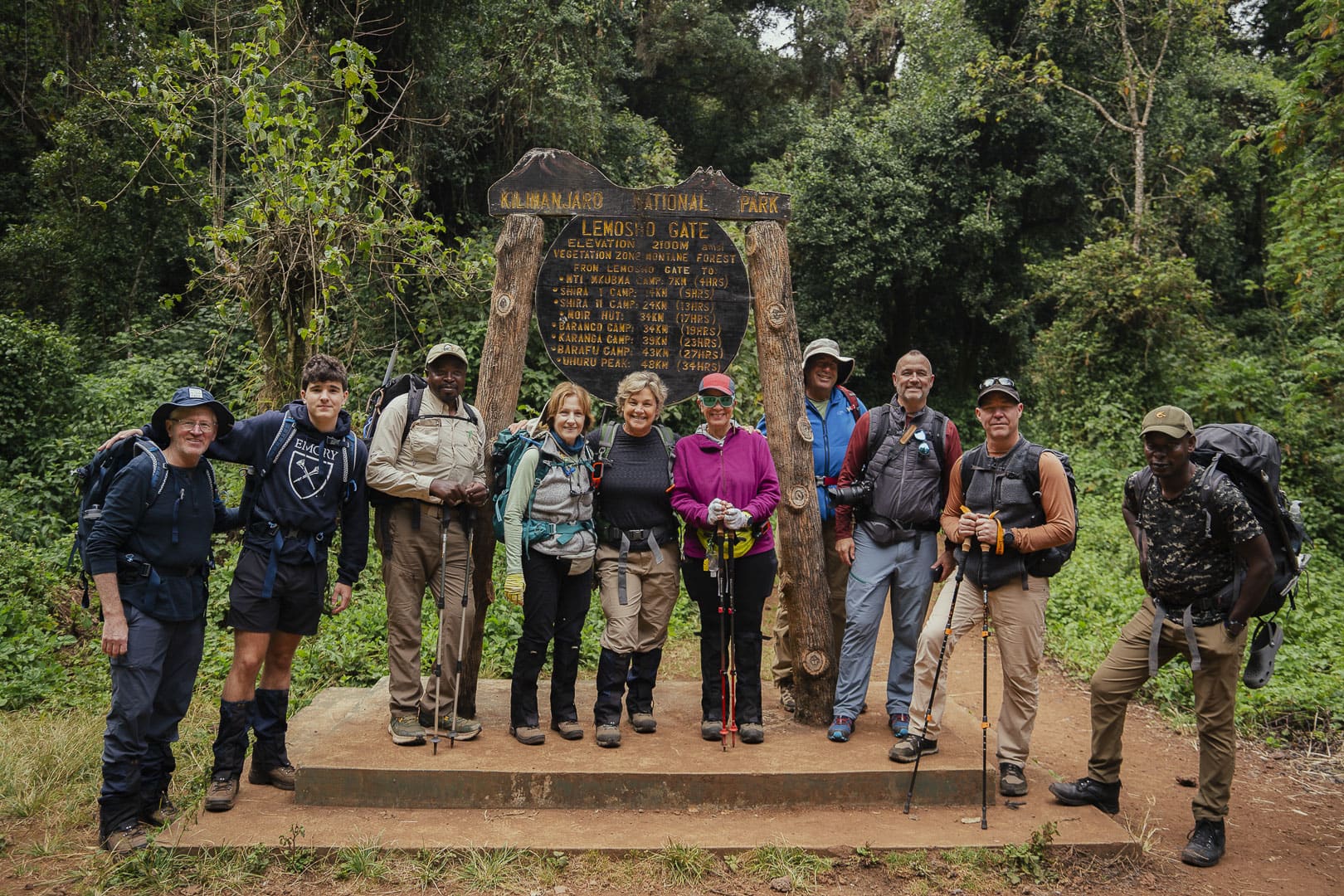
If you plan to use trekking poles, train with them before your trip.
Poles can be particularly useful on uneven ground and during long descents.
Learning how to adjust their length and use them naturally will make them much more useful than carrying them for the first time on the mountain.
What Equipment Should You Test During Training?
Your training programme is also an equipment-testing period.
Use your hikes to test your hiking boots, socks, backpack, rain jacket, trekking poles, water system, warm layers and other essential equipment.
Kilimanjaro’s weather varies considerably with elevation, and TANAPA notes that conditions can be unpredictable. Warm, weatherproof clothing and suitable footwear are essential.
Testing everything beforehand reduces unpleasant surprises on the mountain.
What If You Are Not Physically Fit Yet?
Do not panic.
If your Kilimanjaro trek is several months away, you have time to build your fitness progressively.
Start with regular walking. Increase the duration gradually. Add hills and strength training. Then introduce longer hikes.
You do not need to transform yourself overnight.
Consistency is much more important than attempting extreme workouts.
If you have a medical condition, are pregnant, have significant joint problems, or have concerns about exercising at high altitude, speak with an appropriately qualified healthcare professional before beginning or intensifying your training.
What Should You Avoid Before Climbing Kilimanjaro?
Avoid the temptation to dramatically increase your training volume immediately before departure.
Overtraining can leave you fatigued or injured.
Likewise, do not assume that very intense gym workouts automatically prepare you for long-distance hiking.
The objective is specific endurance and resilience, not simply maximum strength.
During the final days before your trek, prioritize sleep, recovery, hydration, sensible nutrition and preparation of your equipment.
Kilimanjaro Training Programme for Beginners
For a beginner, the most effective approach is to keep things simple.
Begin with regular brisk walks. Add one longer walk each week. Introduce hills when you become comfortable. Add two basic strength sessions each week. Gradually increase the length of your weekend hike.
After several weeks, begin carrying your daypack and practice walking on consecutive days.
By the final weeks, you should be comfortable spending several hours walking at a steady pace.
You do not need to train every day.
Kilimanjaro Training Programme for Experienced Hikers
If you already hike regularly, your training can focus more specifically on elevation, consecutive trekking days and long-duration endurance.
Increase the length of your hikes gradually and include sustained climbs and descents.
Practice carrying the backpack you will use on Kilimanjaro and test your complete clothing and footwear system.
You can also incorporate strength training designed around hiking-specific movements.
Even experienced hikers should remember that Kilimanjaro’s altitude presents a different challenge from ordinary mountain hiking.
Can You Prepare for Kilimanjaro Without a Gym?
Absolutely.
A gym can be useful, but it is not essential.
Walking and hiking can form the foundation of your programme, while stairs, hills and bodyweight exercises can provide strength and elevation training.
Squats, lunges, step-ups, calf raises and planks can all be performed without sophisticated equipment.
If you have access to outdoor trails, make good use of them.
Trek and Hide Adventures Kilimanjaro Training Support
Preparing for Kilimanjaro should not feel overwhelming.
At Trek and Hide Adventures, we can help you understand what your chosen route involves, how long you will be walking each day and what type of preparation is appropriate.
Our experienced mountain team can also guide you on pacing, equipment, hydration and the importance of acclimatization once you begin your trek.
Kilimanjaro National Park itself identifies hiking and climbing as key visitor activities, and TANAPA provides official guidance and procedures for visitors planning their park experiences.
Whether you are a first-time trekker or an experienced hiker, our goal is to help you arrive prepared and approach the mountain with realistic expectations.
Final Thoughts: Prepare Well, Trek Slowly and Enjoy the Mountain
A successful Kilimanjaro climb begins long before you reach Tanzania.
A consistent Kilimanjaro training programme can improve your endurance, strengthen your legs, prepare your body for long trekking days and give you greater confidence.
But training is only one part of the equation.
Choosing an appropriate route, allowing sufficient time for acclimatization, walking pole pole, staying hydrated, using suitable equipment and listening carefully to your mountain guide are equally important.
Kilimanjaro is not a race.
The mountain rewards patience.
With thoughtful preparation and the right support team, you can arrive in Tanzania ready to enjoy the journey—not simply focused on reaching the summit.
Train for the trail. Prepare for the altitude. Walk pole pole. Reach for Uhuru Peak with Trek and Hide Adventures.